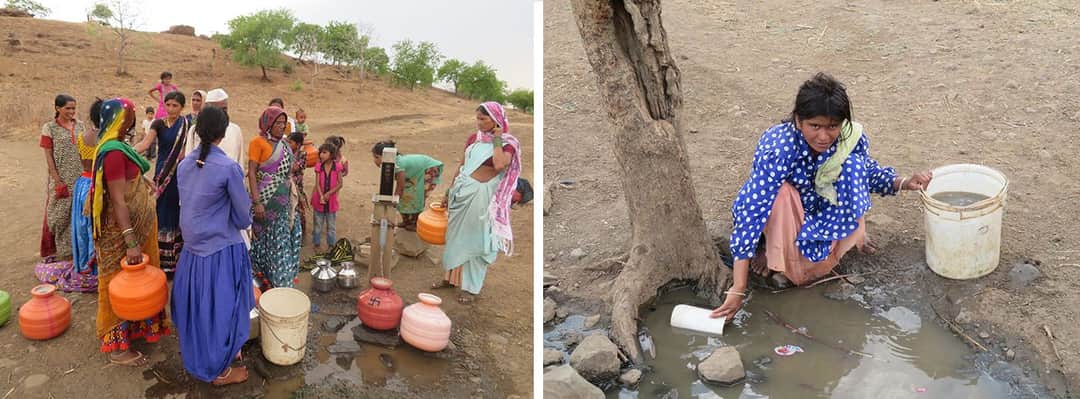

Kewalbai Rathod, 60, is operating a heavy handpump. Every forceful draw is accompanied by a grunt, the veins in her forearm standing out, the wrinkles on her face deepening. For all her effort, the water barely trickles into the pot. Several villagers await their turn. And the pump might run out of water at any time.
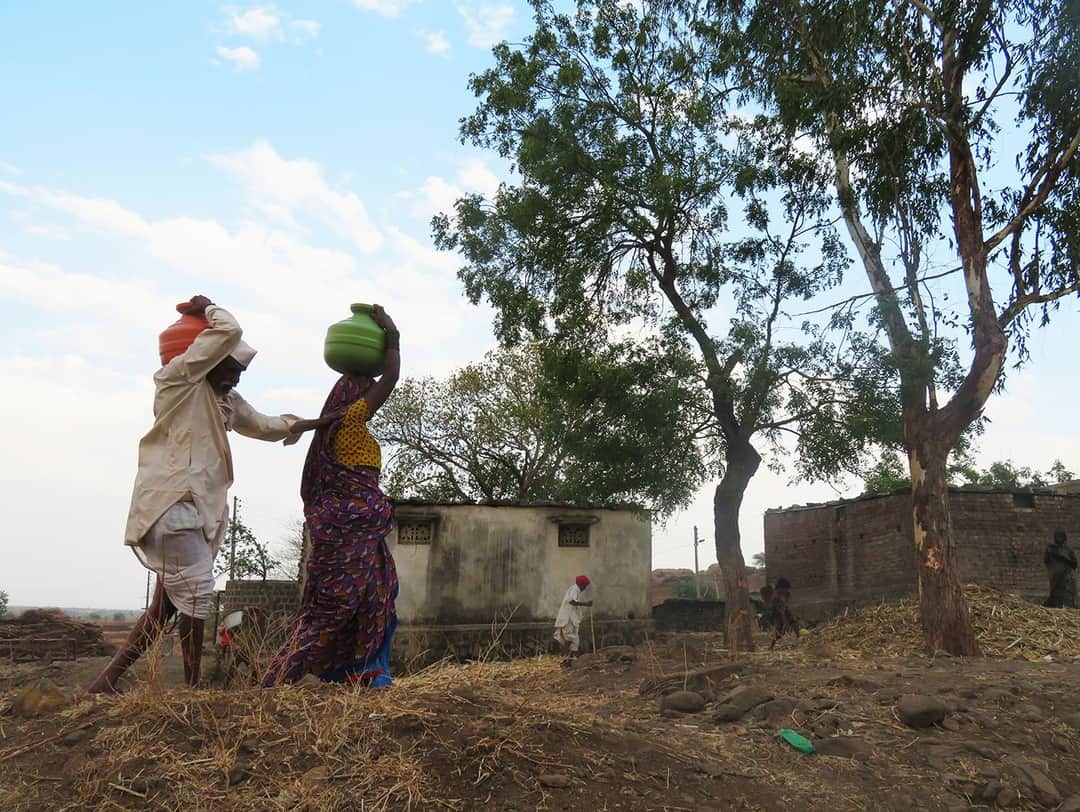
An hour later, at around 5 p.m., Kewalbai has managed to fill two pots. Her husband Ramu, 65, sits on a nearby rock, gazing into space. “ Zaala re (It is done),” Kewalbai calls out in Marathi, and Ramu stands up, but does not move. She picks up one pot and walks up to him to hand it over. He parks it safely on his shoulder, while Kewalbai picks up the other. She then takes his hand and places it on her shoulder, and the two begin to walk towards their home. “He is blind,” she explains, looking at my puzzled face.