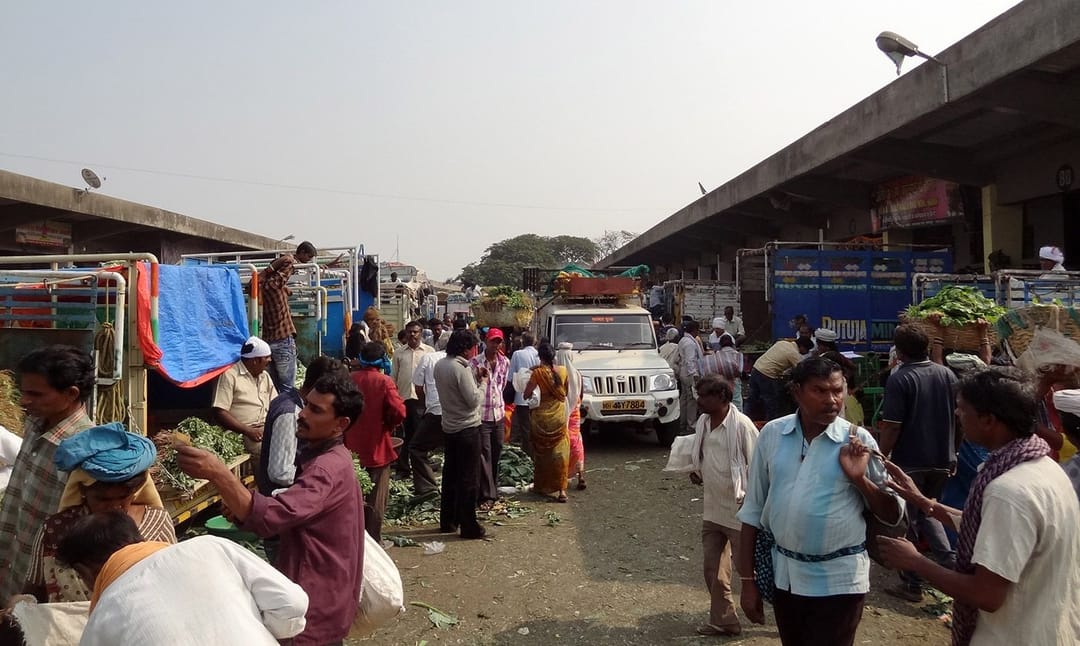
Many farmers have junked their vegetables in the absence of buyers at markets in Thane and Pune, newspaper reports suggest.
At the Hiwarkhed village market in Amaravati, about 160 kilometres from Nagpur, orange growers have dumped mounds of the fruit on the roads in protest at the sharp fall in prices.
The prices have fallen because the traders have stopped buying. The traders aren’t buying because most farmers aren’t accepting the old notes.
Is the farmers’ plight solely an inevitable consequence of a poorly planned demonetisation, or are they shooting themselves in the foot by insisting on payments in usable cash?
The trader offered to transfer the money directly into his bank account. Pawar, former sarpanch of Aamgaon village, agreed. The money got transferred immediately, without any hassles.
Later that day, Pawar said, eight more farmers known to him sold about 80 quintals of cotton at the mandi , accepting the old notes. With hardly any other arrivals, the trader bought their cotton at Rs. 5,000 a quintal – a little more than the market price of Rs. 4,750-4,900.
So why are more farmers not following their example? Pawar explains:
Most farmers are afraid to put their earnings in their bank accounts because these are in the same banks from where they have taken crop loans. A majority are long-term defaulters because, for years, they haven’t earned enough to repay their loans as well as sustain their families.
Once their earnings go into their accounts, they fear the banks will discourage withdrawals, pressuring them to leave a balance equal to the sum they would need to repay by March to settle their loans. Most farmers know that this would leave them in serious jeopardy.
There’s no government order asking the banks to unilaterally deduct the loan repayment from the farmers’ accounts, but the banks have used pressure tactics in the past, knowing well that the farmers cannot afford to annoy them because they would need a loan the following year too.
“I could accept the money transfer because I don’t have a loan in my name, nor do I need cash urgently,” Pawar said. “Our crop loan is linked to my father’s account, so the bank cannot deduct the repayment amount from my account.”
Nor were the other eight sellers at the mandi in any urgent need of cash, he said. “But most small farmers, who do sustenance farming and have no other income, won’t accept cheques or money transfers.”
On Wednesday, November 16, Sudam Pawar, 38, was the lone farmer at the mandi in Selu town in Wardha district, about 70 kilometres from Nagpur, selling his nine quintals of cotton.
“Demonetisation has wrecked the farmers,” said Ramkrishna Umathe, farmer and deputy chairman of the Agriculture Produce Market Committee (APMC) mandi at Selu, which serves about 100 villages growing mainly soybean and cotton. “For about a week, sellers and buyers have virtually deserted our market.”