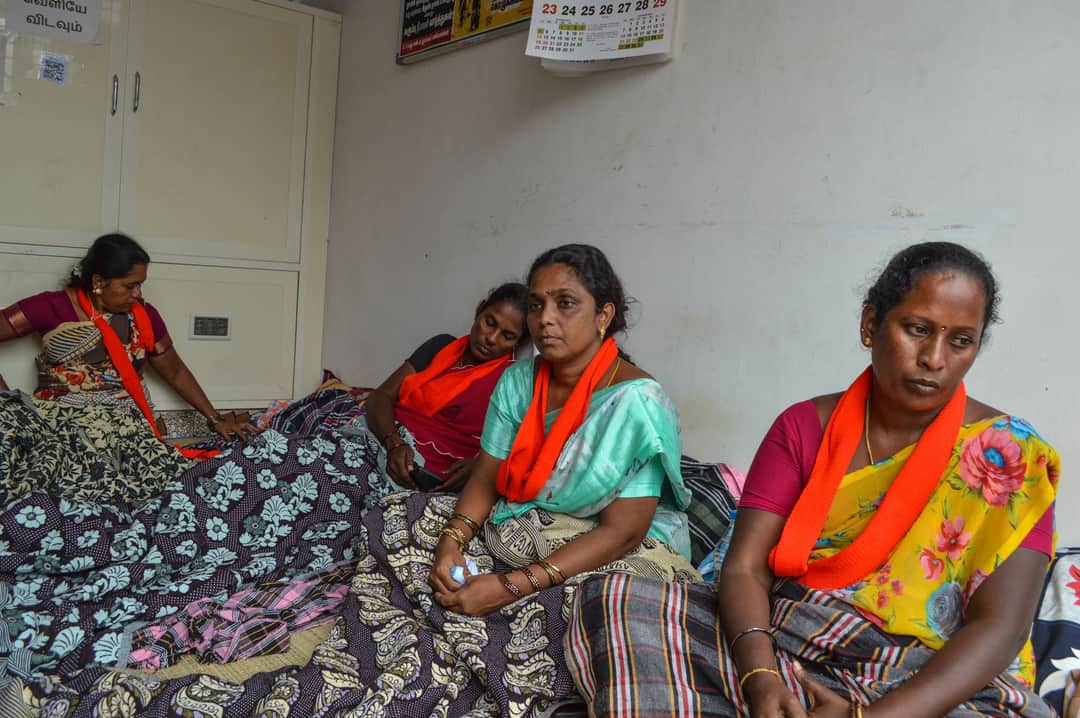
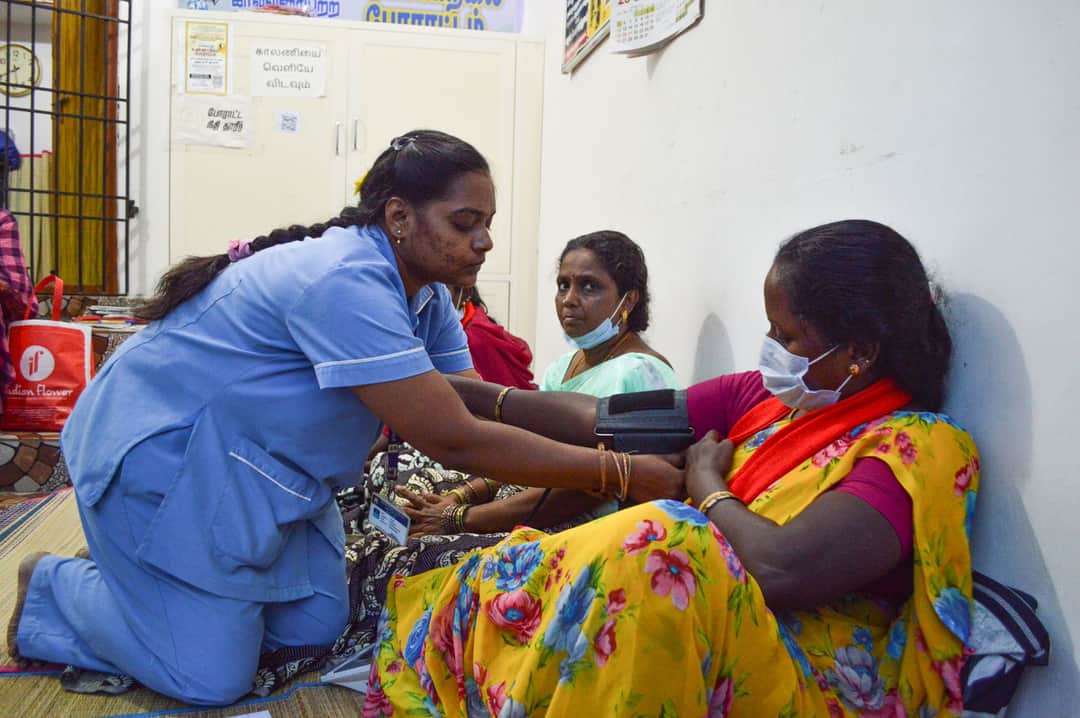
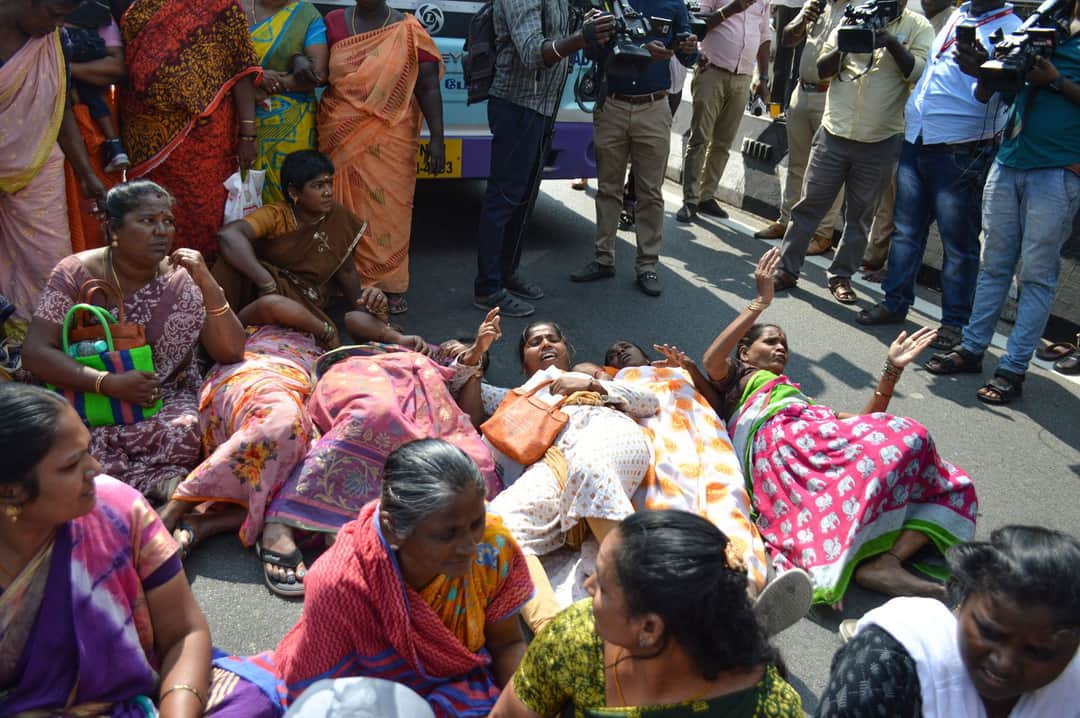
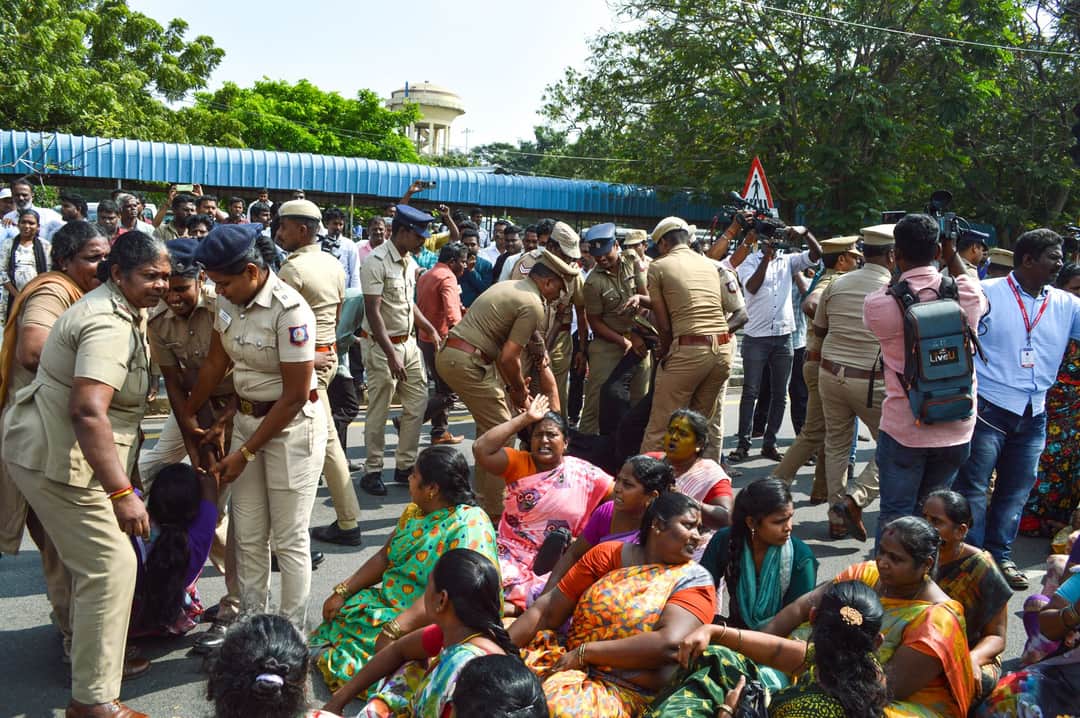
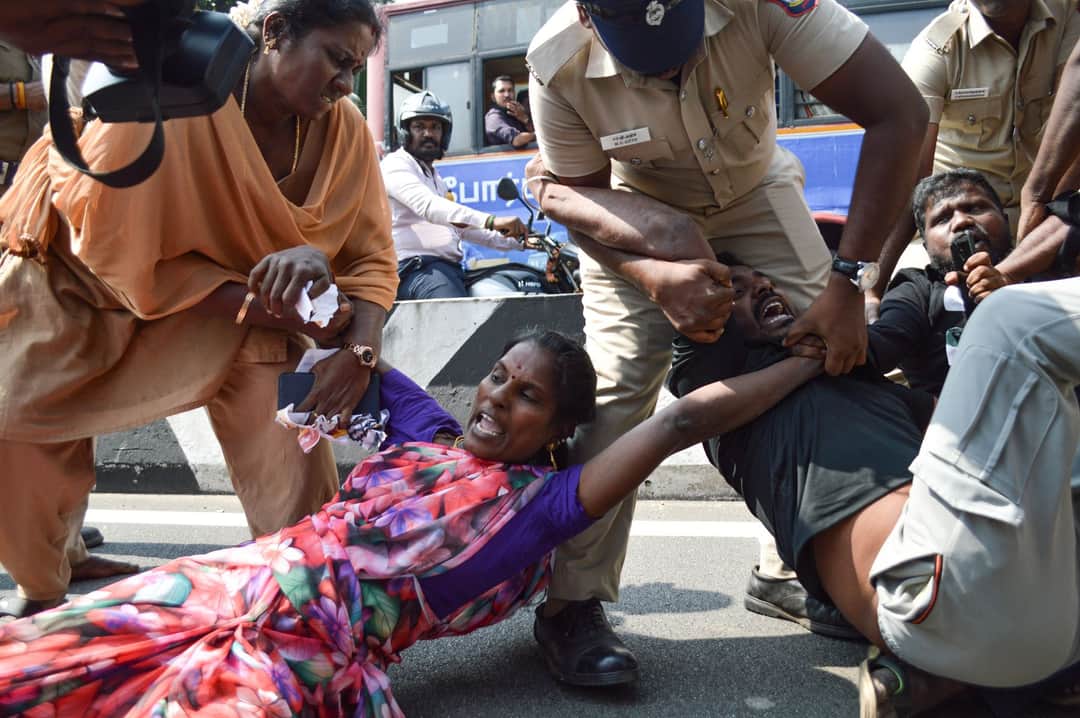
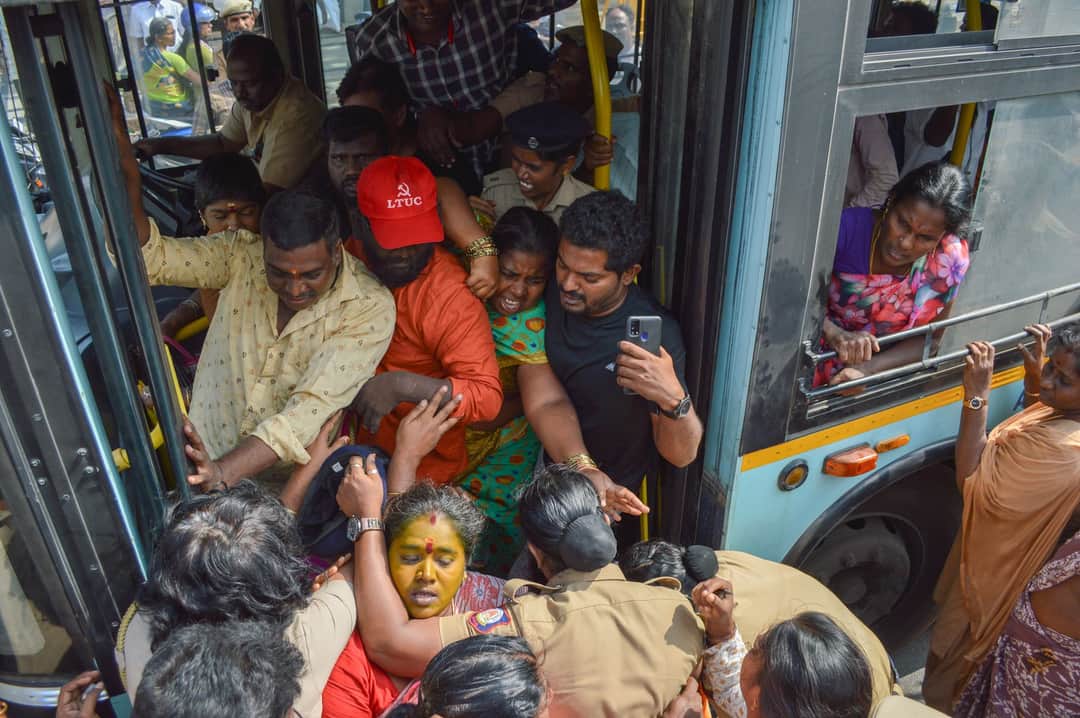
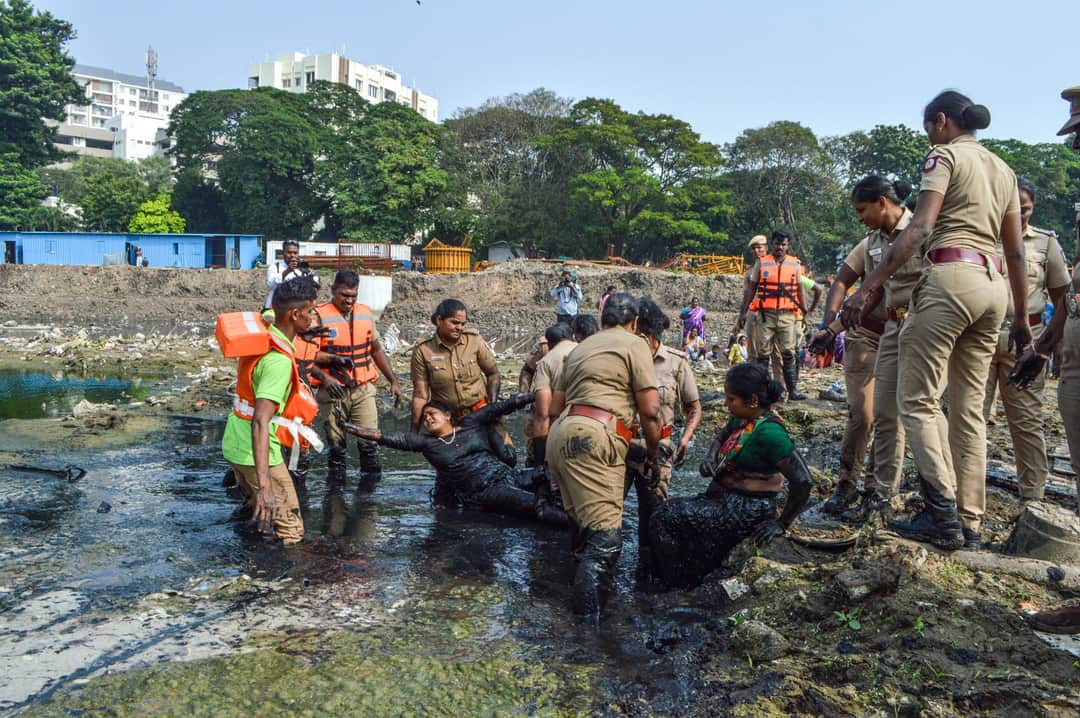
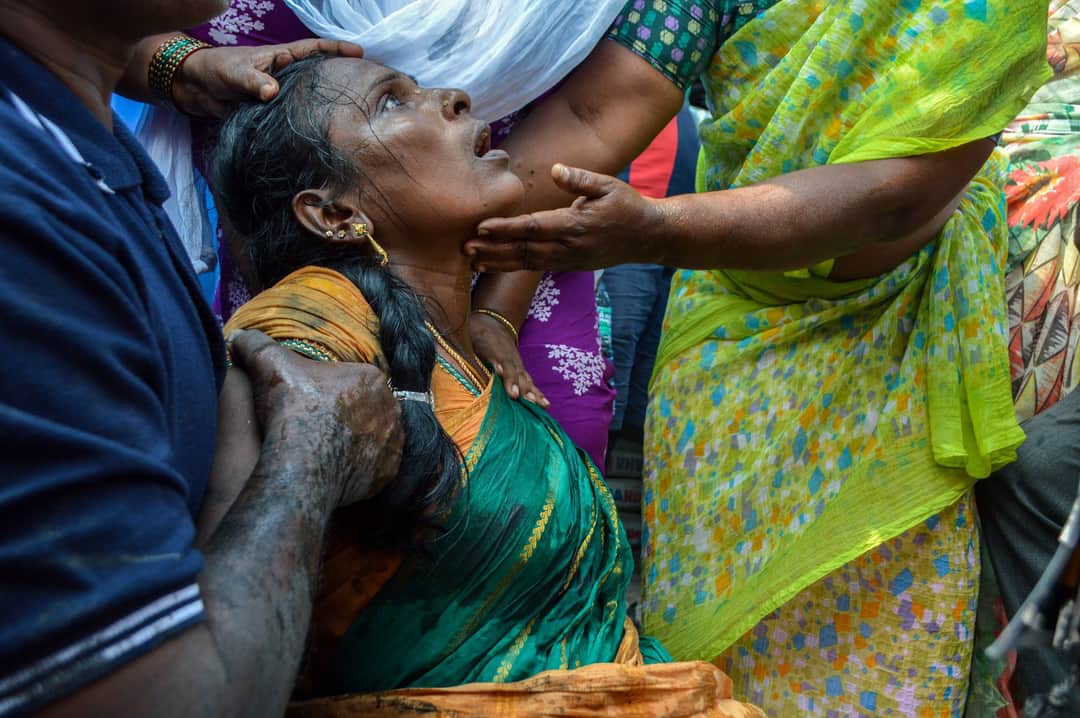
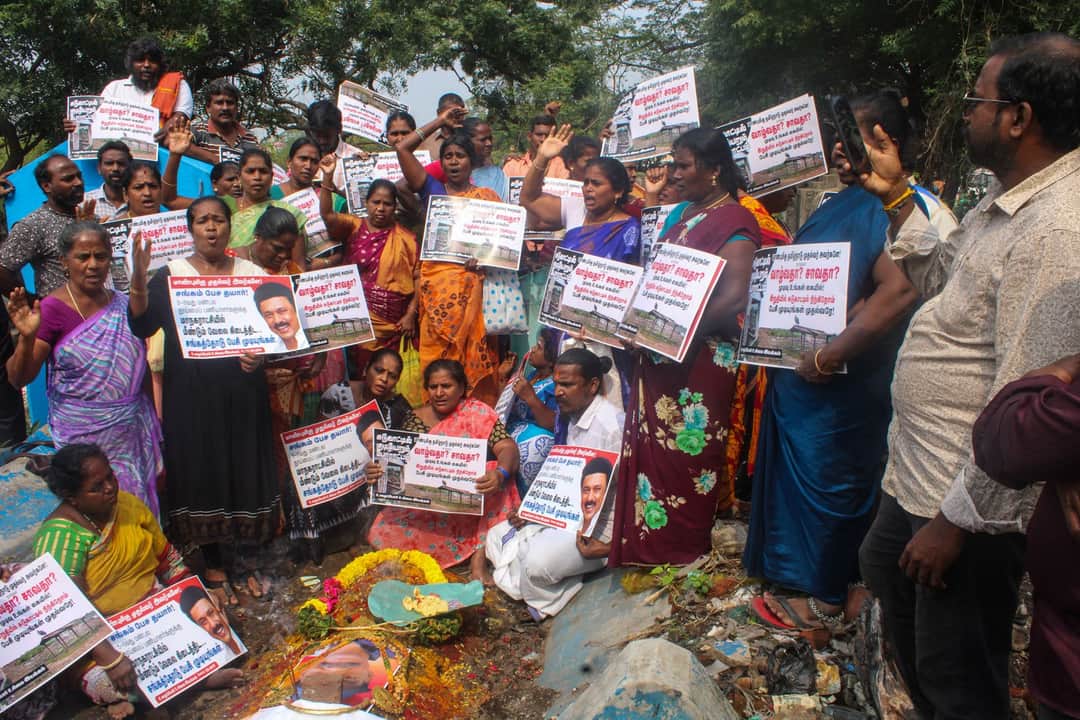
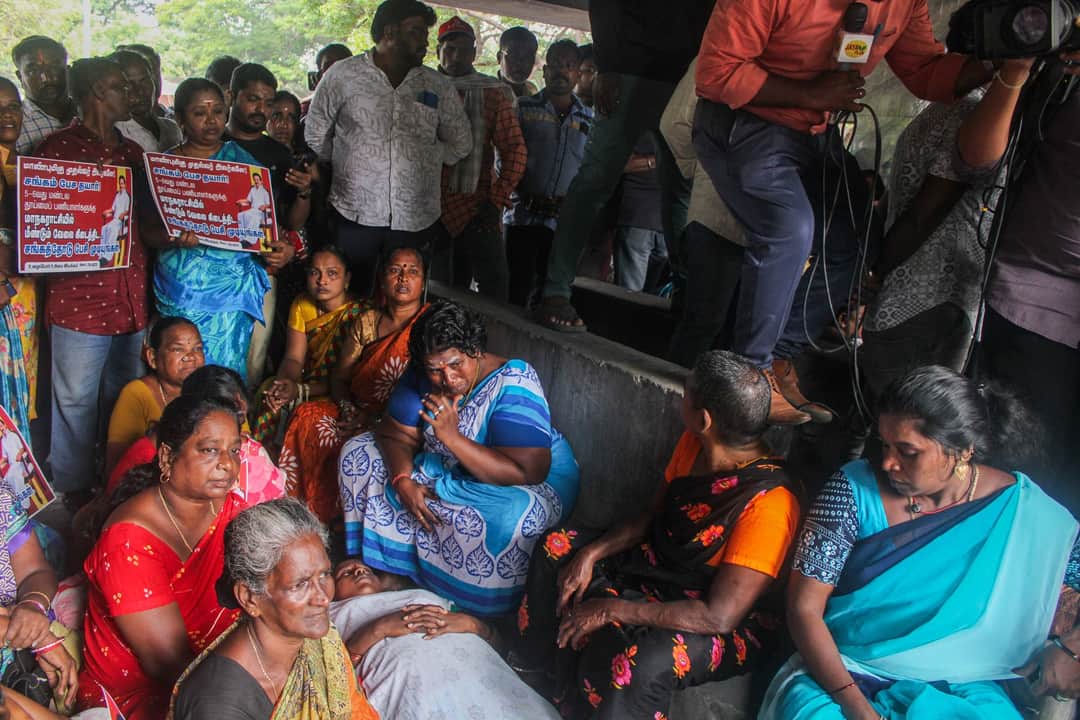
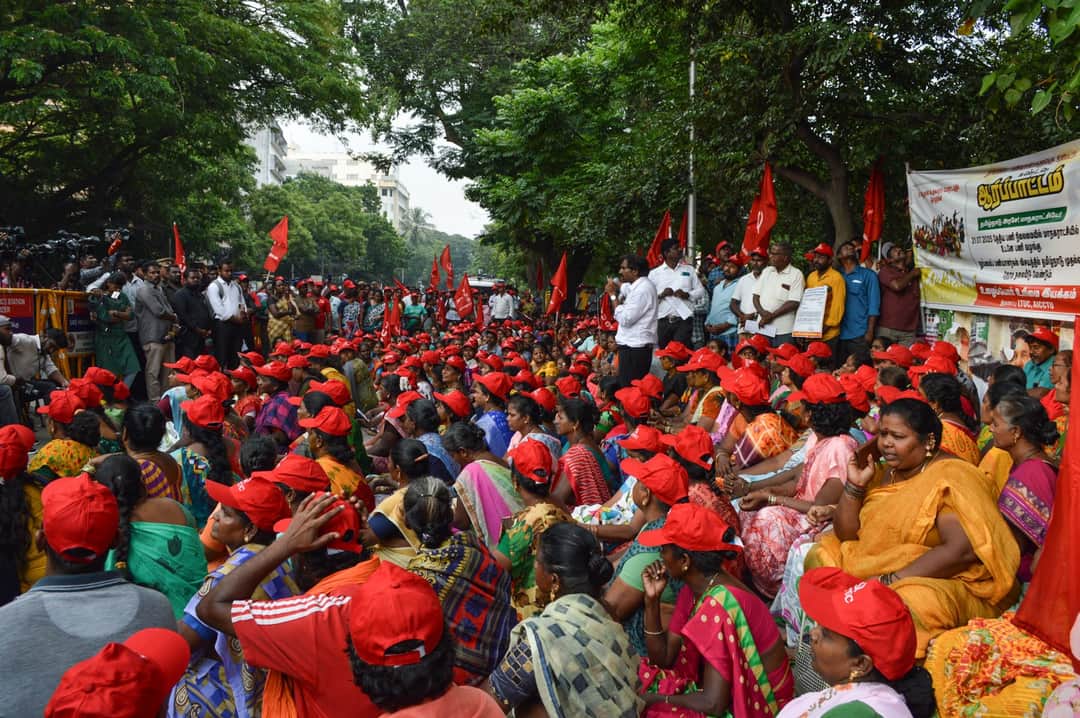
She pointed out that the majority of Greater Chennai Corporation (GCC) sanitary workers belong to Dalit and Arunthathiyar communities, making the exclusion not merely bureaucratic, but structural. “This is institutionalised discrimination – both caste and class-based,” the 37-year-old worker added.
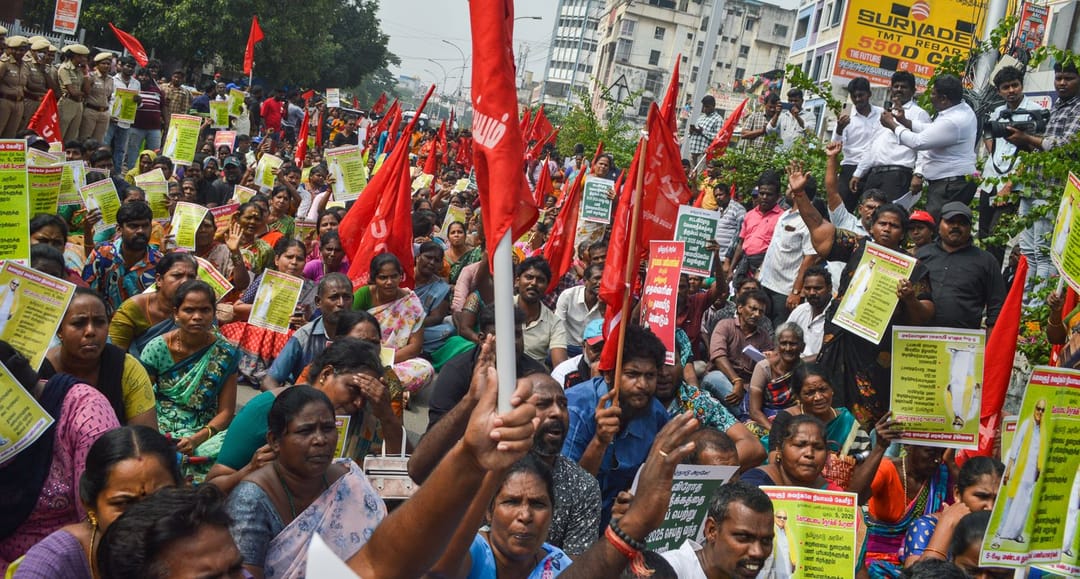
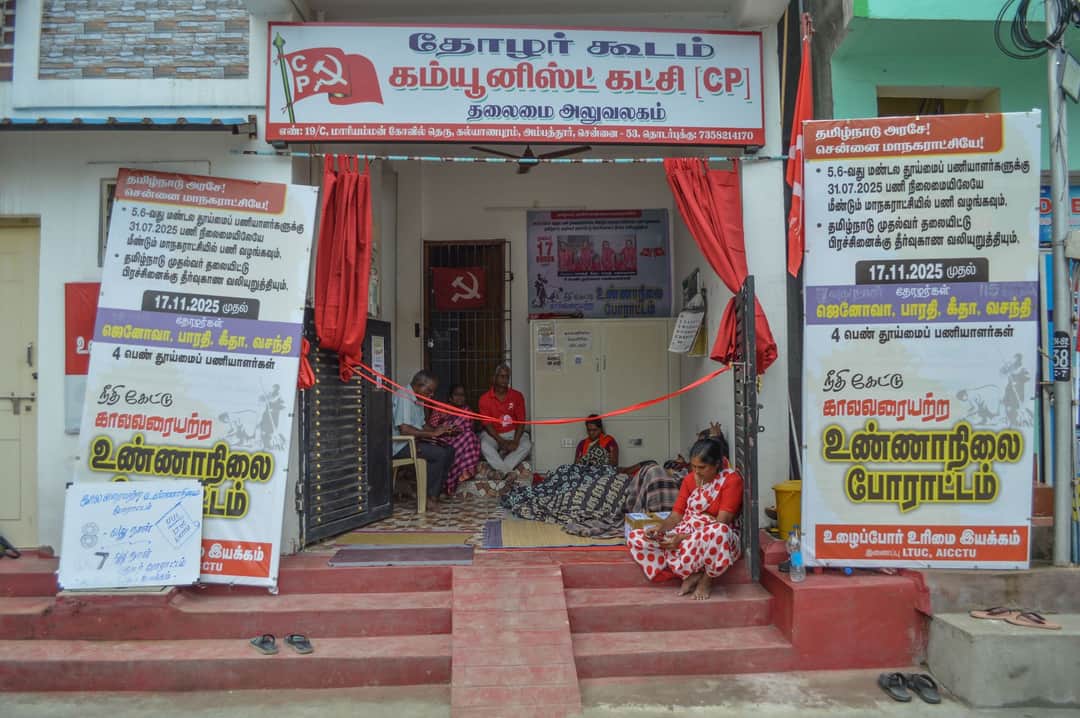
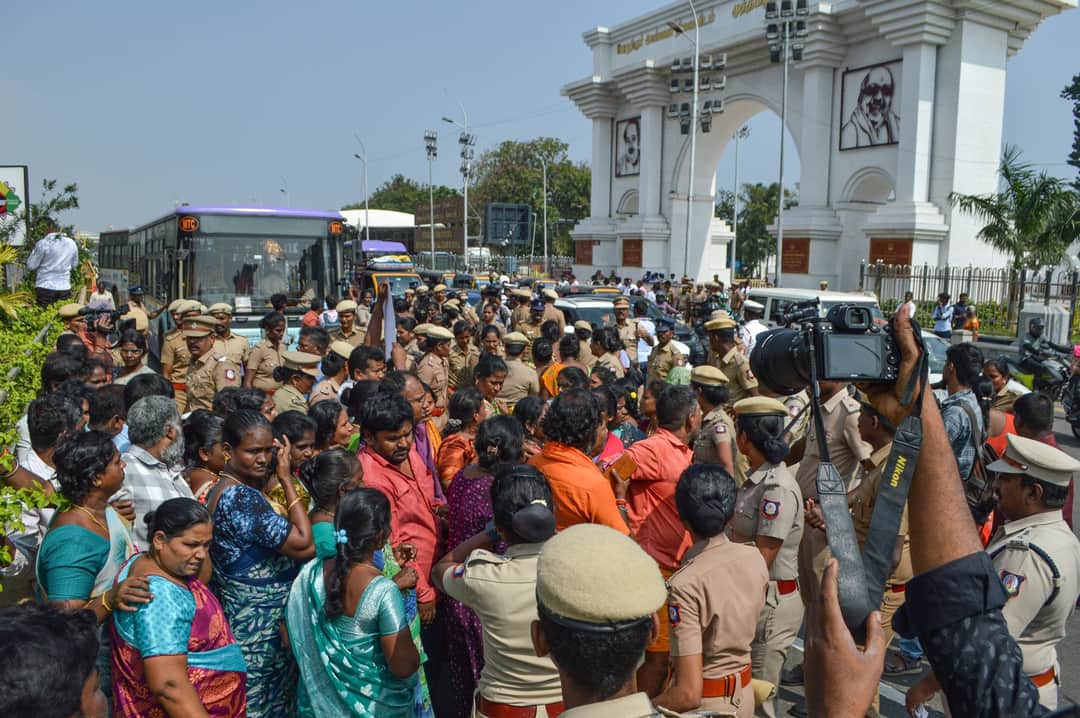
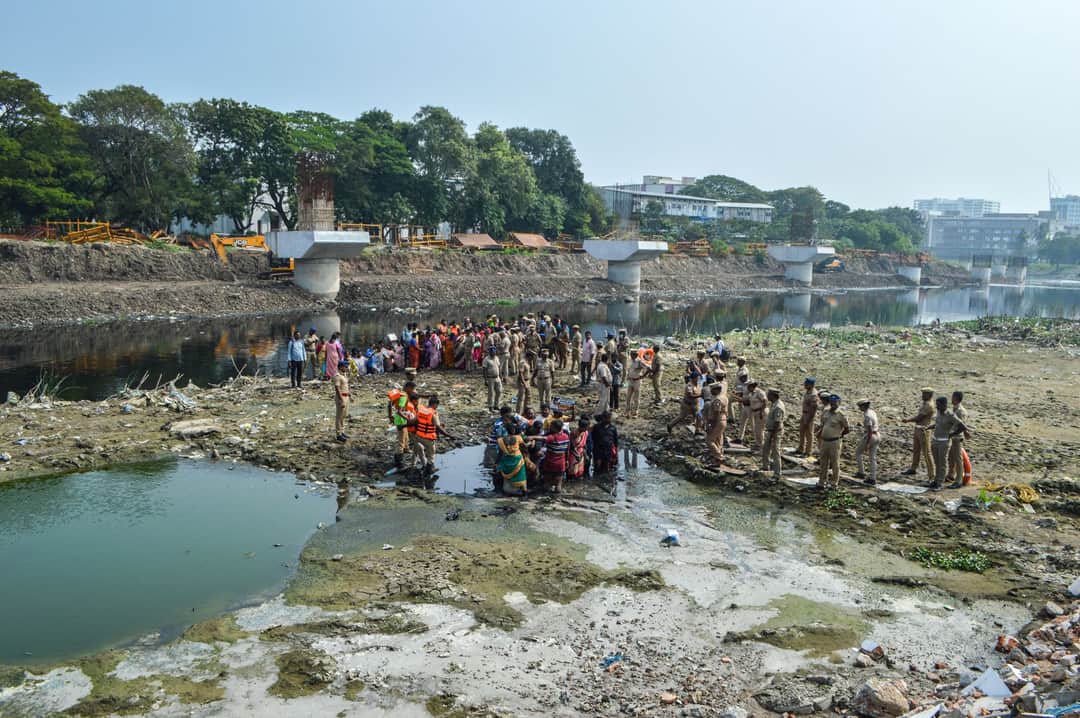
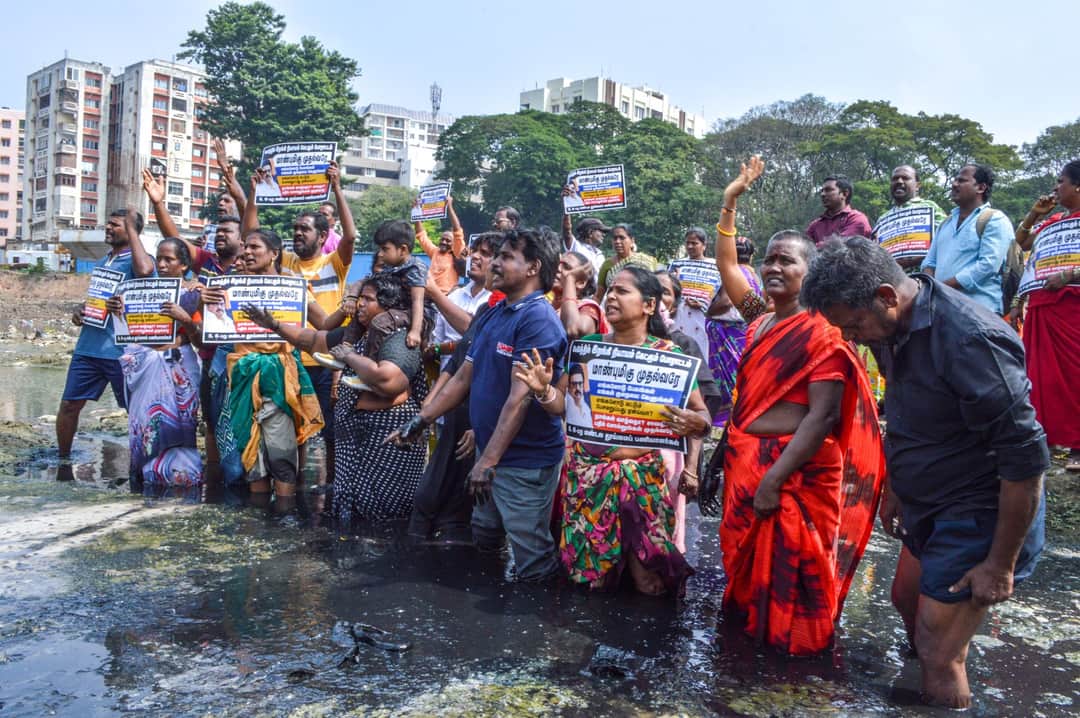
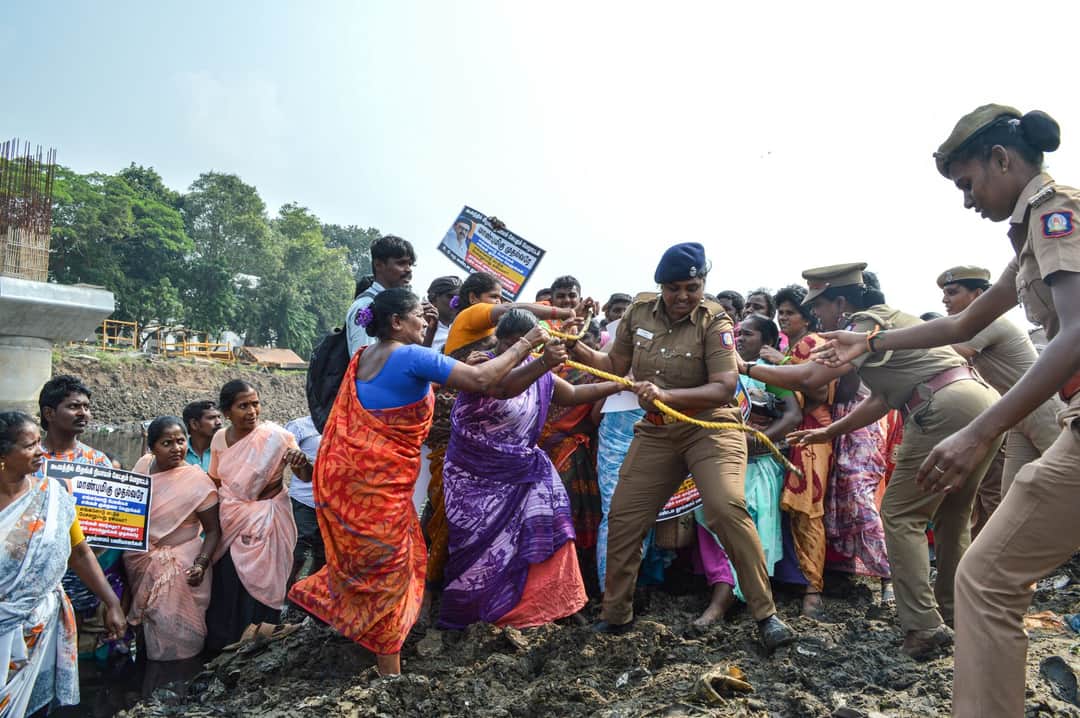
Sanitation workers have been supported by trade unions including Uzhaipor Urimai Iyakkam (UUI), Left Trade Union Centre (LTUC), and All India Central Council of Trade Unions (AICCTU), along with civil society organisations, and student groups from various universities. The protests were led by veteran trade union leaders Comrade K. Bharathi and senior trade unionist Kumaraswamy. From the outset, the movement was spearheaded by these organisations and activists. Another protest was held on November 28, 2025, under the leadership of Advocate Pulianthope Mohan and Kuttu Iyyakam. It too received quite a bit of support.
Despite the duration and intensity of the protest, the Tamil Nadu government was slow to offer a resolution. Their silence was in stark contrast to their swift response to other workers’ demands. On December 24, 2025, Health Minister Subramaniam announced that 1,000 contract nurses would be absorbed into permanent government service within a week of their protest. Earlier, 2,500 temporary workers under the Hindu Religious and Charitable Endowments (HR&CE) Department were regularised, with an additional 1,500 temple workers promised permanent employment.
These decisions only served to sharpen a deeply rooted sense of injustice.