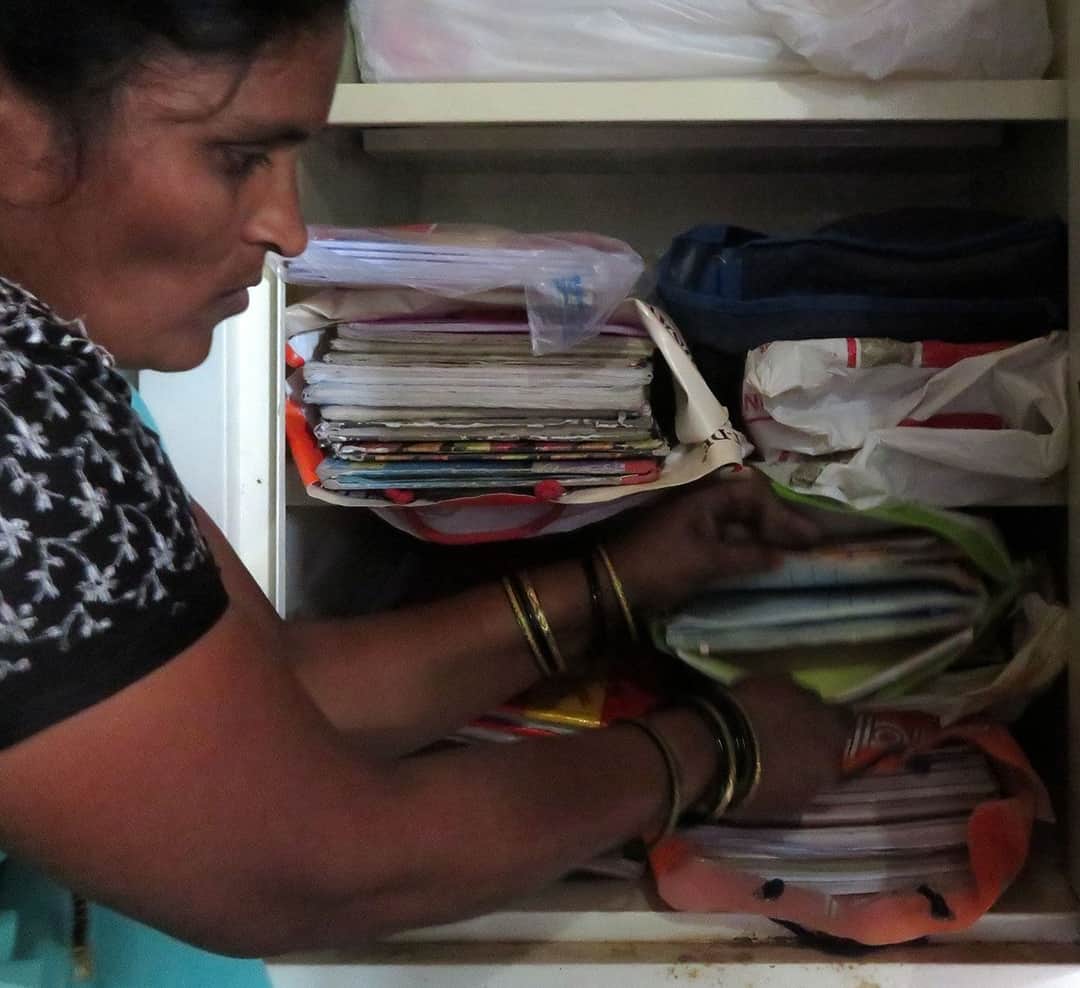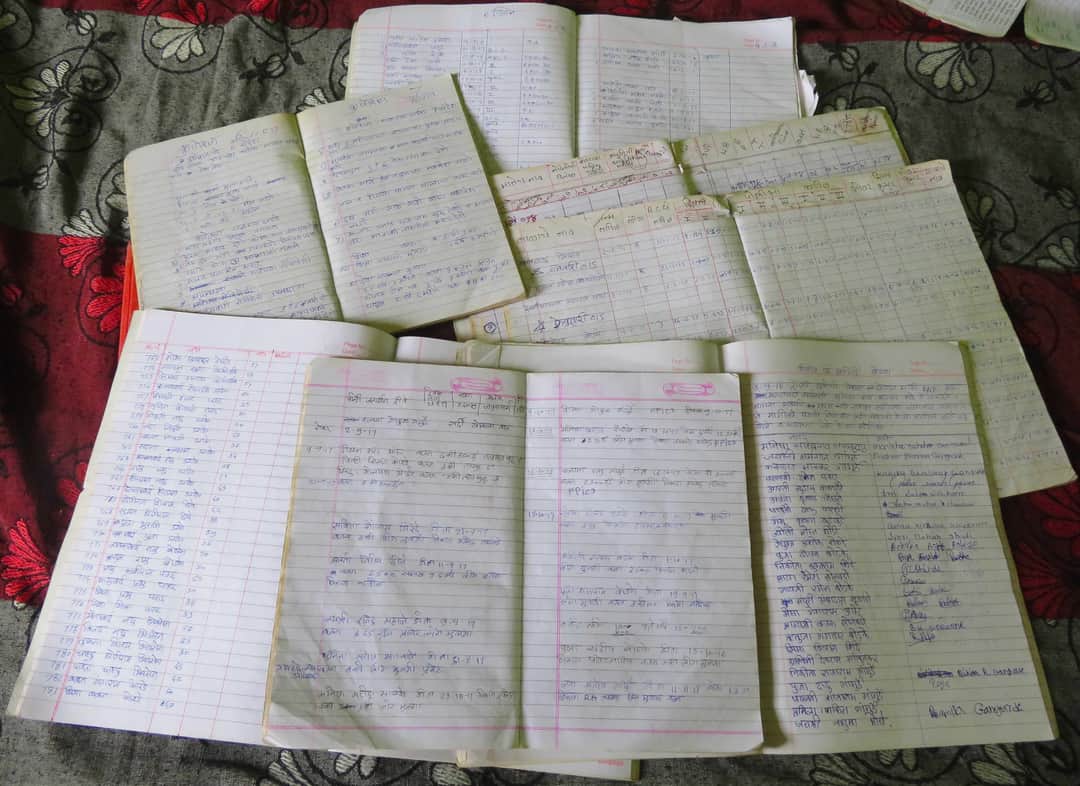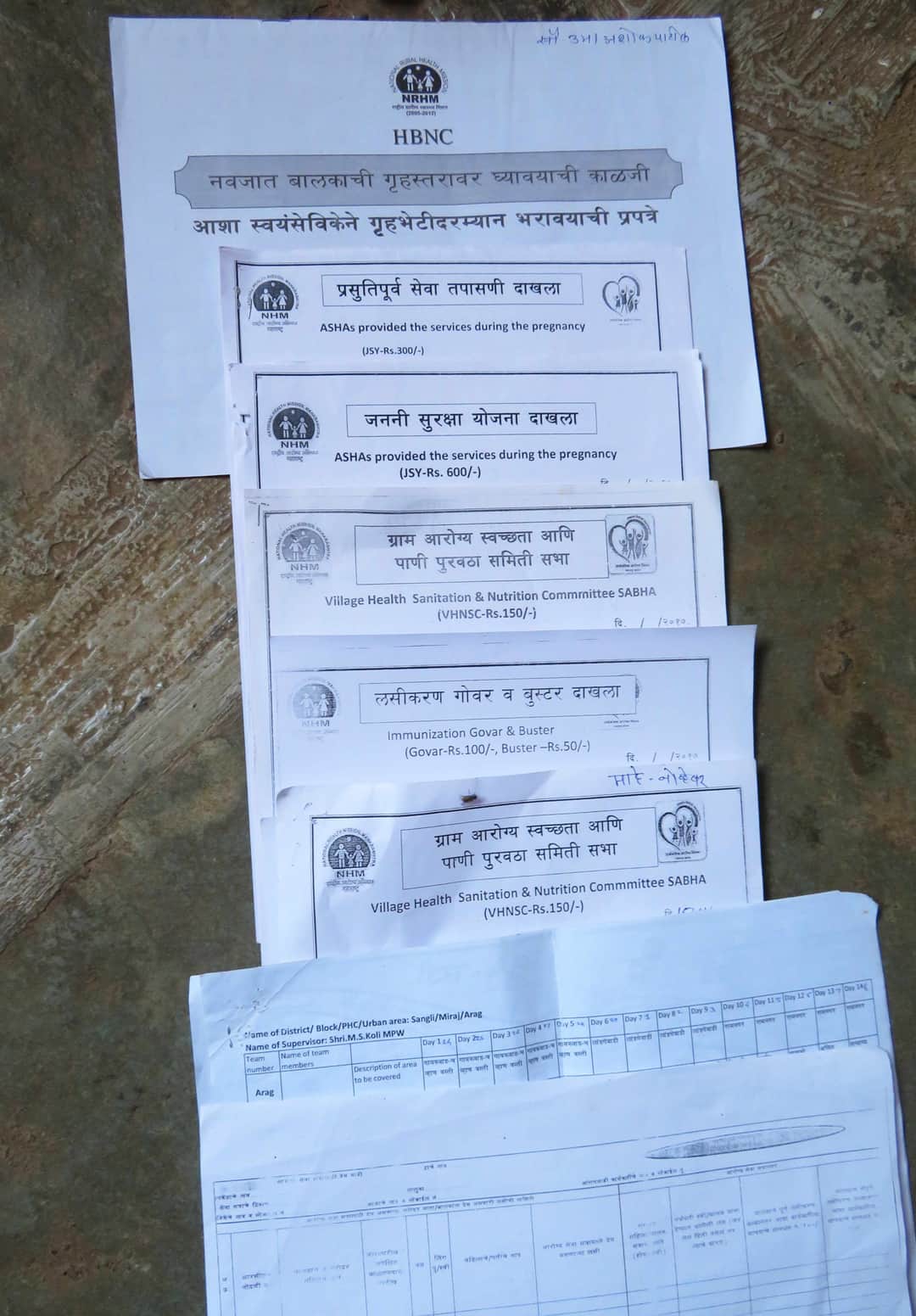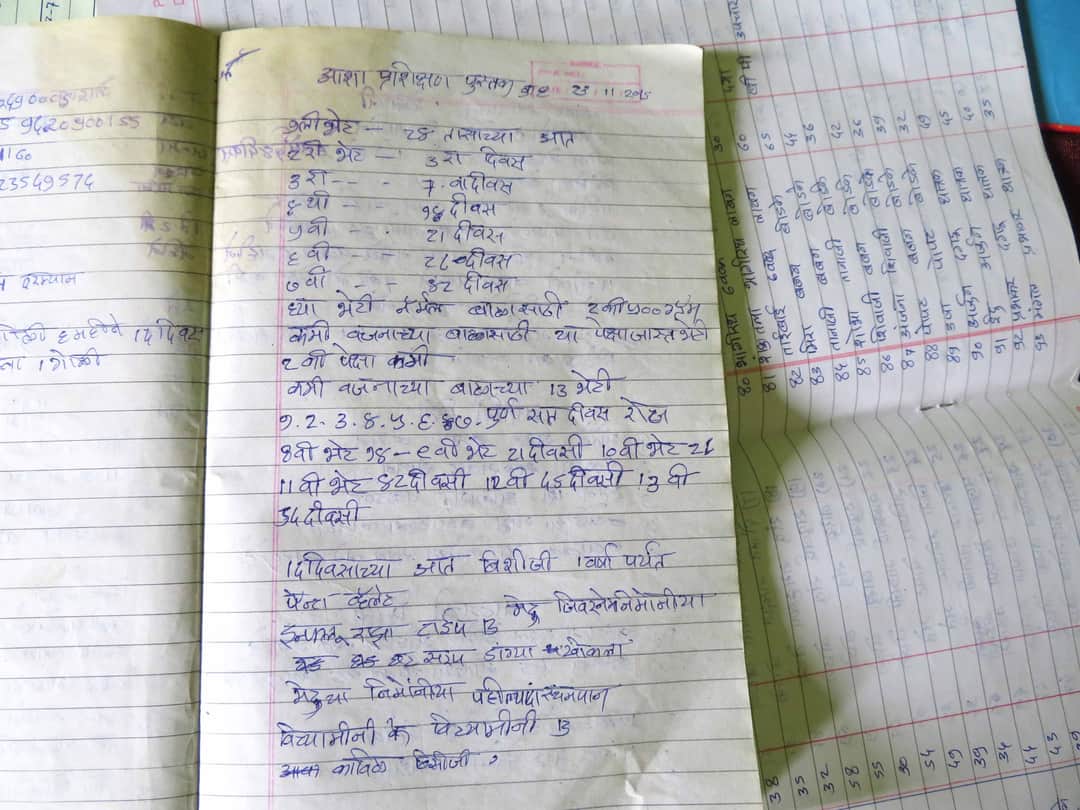

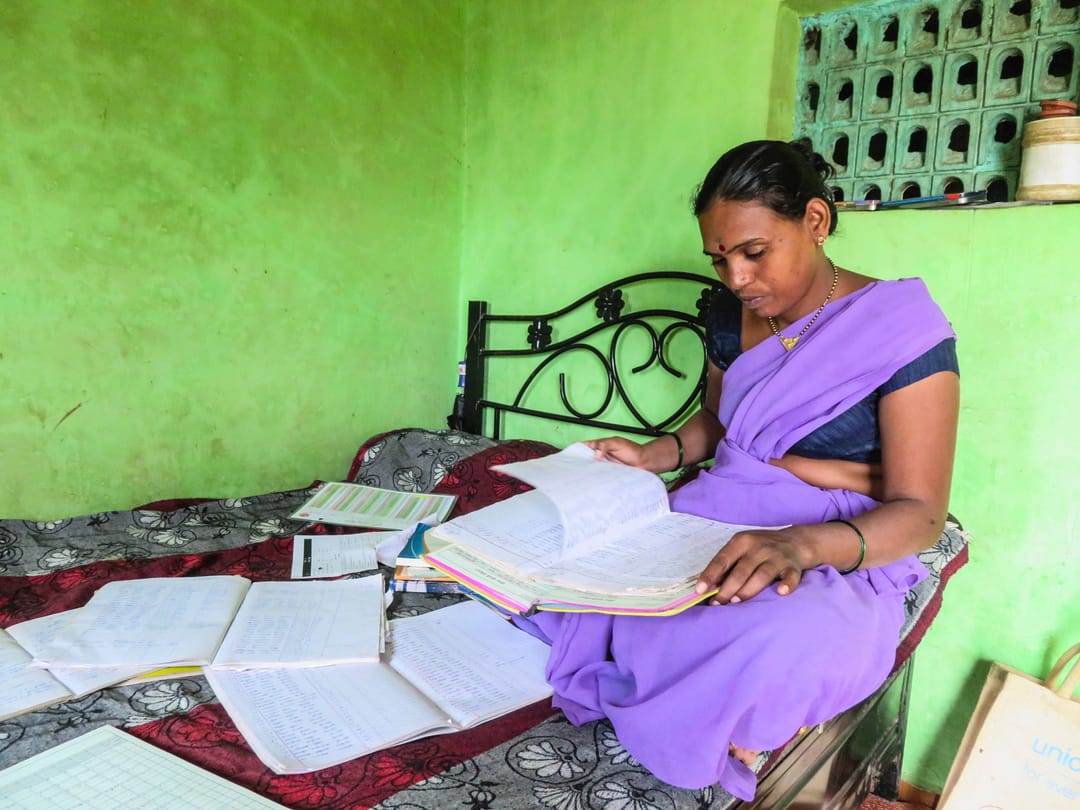
A corner of a small iron cupboard in Uma Patil’s two-room house contains a decade of handwritten records – in large registers, notebooks, diaries, and in photocopies of survey forms. All placed one above the other in thick polythene bags.
It is in these ever-growing stacks that the health of much of rural Maharashtra is recorded by Accredited Social Health Activists (ASHA) – data about child birth, immunisation, adolescent nutrition, contraception, tuberculosis and a lot more. Uma has been keeping these voluminous books since 2009 for the people in Arag village in Miraj taluka of Sangli district in Maharashtra. And repeatedly trying to inform and guide her village about health issues.
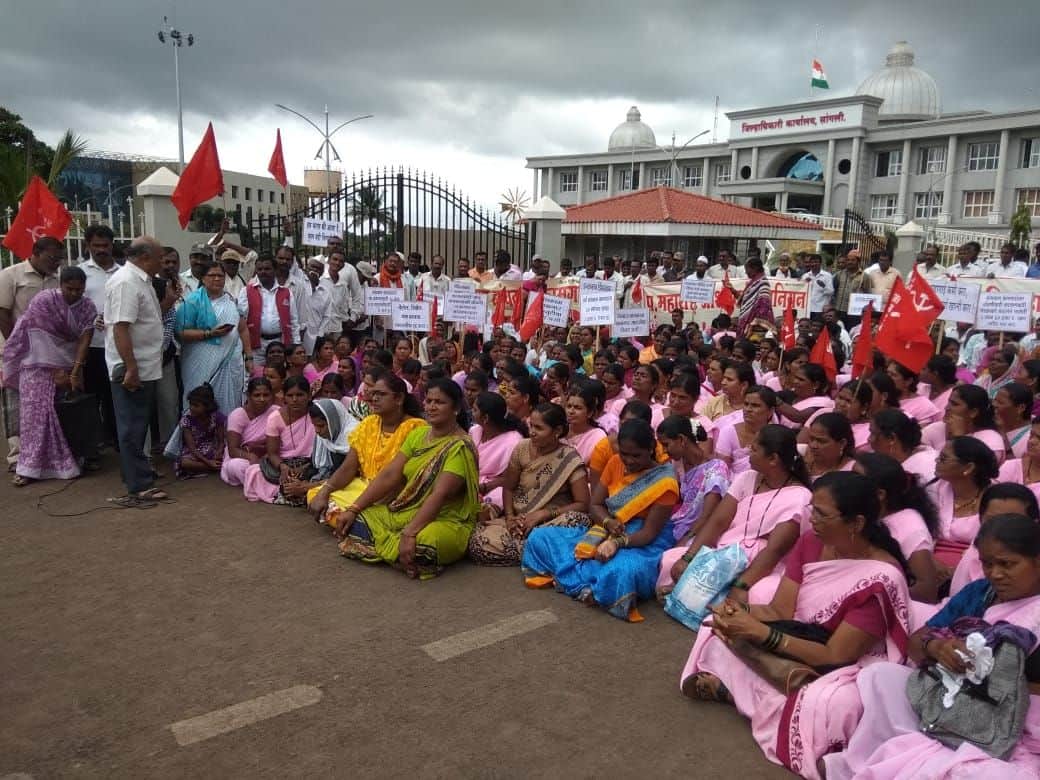
Like 45-year-old Uma, across rural Maharashtra, 55,000 ASHA workers spend long hours every day ensuring basic healthcare for their villages. This workforce was established as part of the National Rural Health Mission (NRHM) in 2005. The community health activists, all of them women, are appointed after 23 days of training. The NRHM mandates one ASHA for every 1,000 people in Adivasi villages (who has studied till at least Class 8), and one for a population of 1,500 in non-tribal villages (who has cleared at least Class 10).
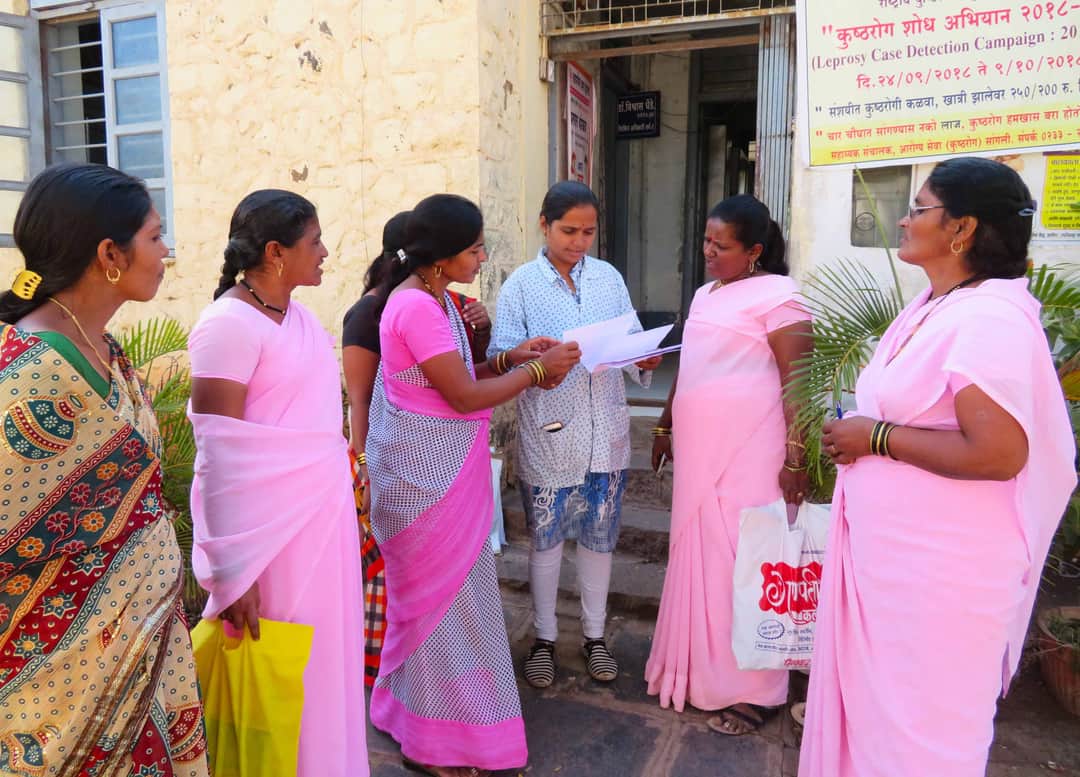
In Arag, a large village of around 15,600 people, along with Uma, 15 other ASHAs fan out around 10 a.m. every morning. Arag is also the main PHC (primary health centre) for Bedag, Lingnur, Khatav, Shindewadi and Laxmiwadi villages in Miraj taluka – with 41 ASHAs for a total population of nearly 47,000.
Each ASHA visits, over time, every household assigned to her, usually spending much more than the mandated five hours a day on this work. “If the houses are within the village, then 10-15 visits can be done in two hours. But some stay at the peripheries or on farms. Then it takes more than five hours for even four visits. And we have to walk kilometres through bushes, farms and muddy pathways. It’s worse during the monsoon,” Uma says.