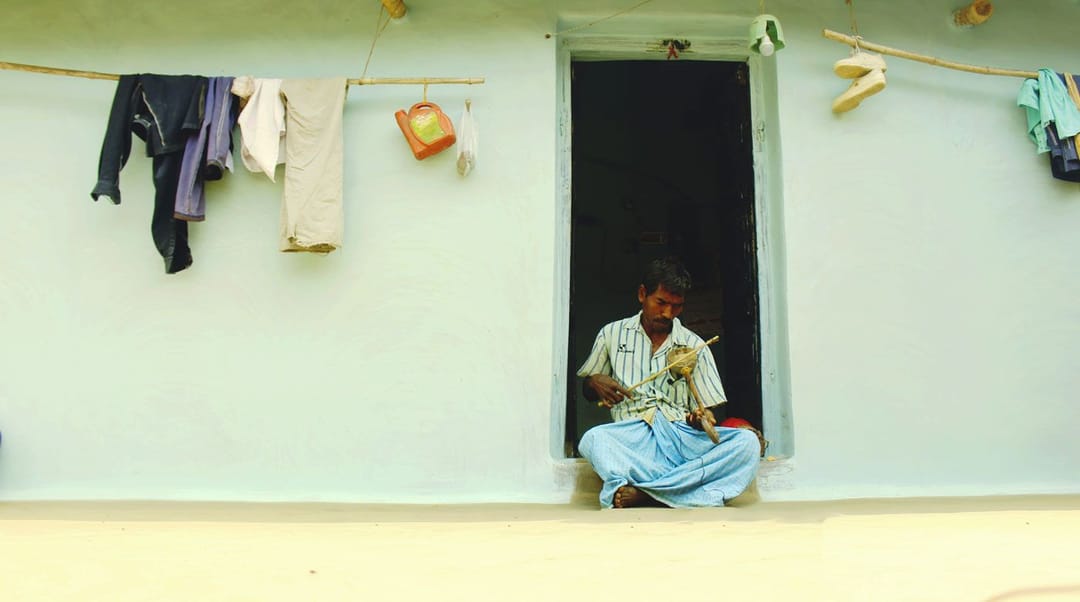
Ganesh Soren’s gabgubi is a tribal variant and ancestor of khomok, a popular instrument of Bengali folk music. He used a dhol (drum) and, oddly enough, one of his son’s toys to make it. Its tune, he says, reminds him of the cheerful innocent giggles of his son and the beat reminds him of the jungle. “I have been playing both instruments for 15 years now, in order to keep my mind fresh” he says. “There was a time when I would play them all evening after a day full of hardship and people would come to listen. But today they have so many options and no one wants to listen to this old fellow.”
Many men from their village work as masons, or daily wage labourers in various towns, and some of them still carry the banam along with them. But not many care to learn this musical tradition any longer, say Ganesh and Hopon. “There are very few people left in the village and community,” says Hopon, “with the knowledge and craftsmanship to create this unique sound.”
“There must be some eager students in our local school, in order to be able to teach there,” says Ganesh. But, he says, the generation is ruled by streamed music and mobile apps, all at the click of a button. How could they be made interested in the banam?
Neither Ganesh nor Hopon owns or can afford a cellphone.
Both Ganesh and Hopon also link the decline of their beloved banam to their own economic situation. They are poor agricultural labourers working more hours for less money. “If I want to play banam,” says Ganesh, “my entire family would remain hungry for days.”
“The sound can’t feed our hunger,” says Hopon.