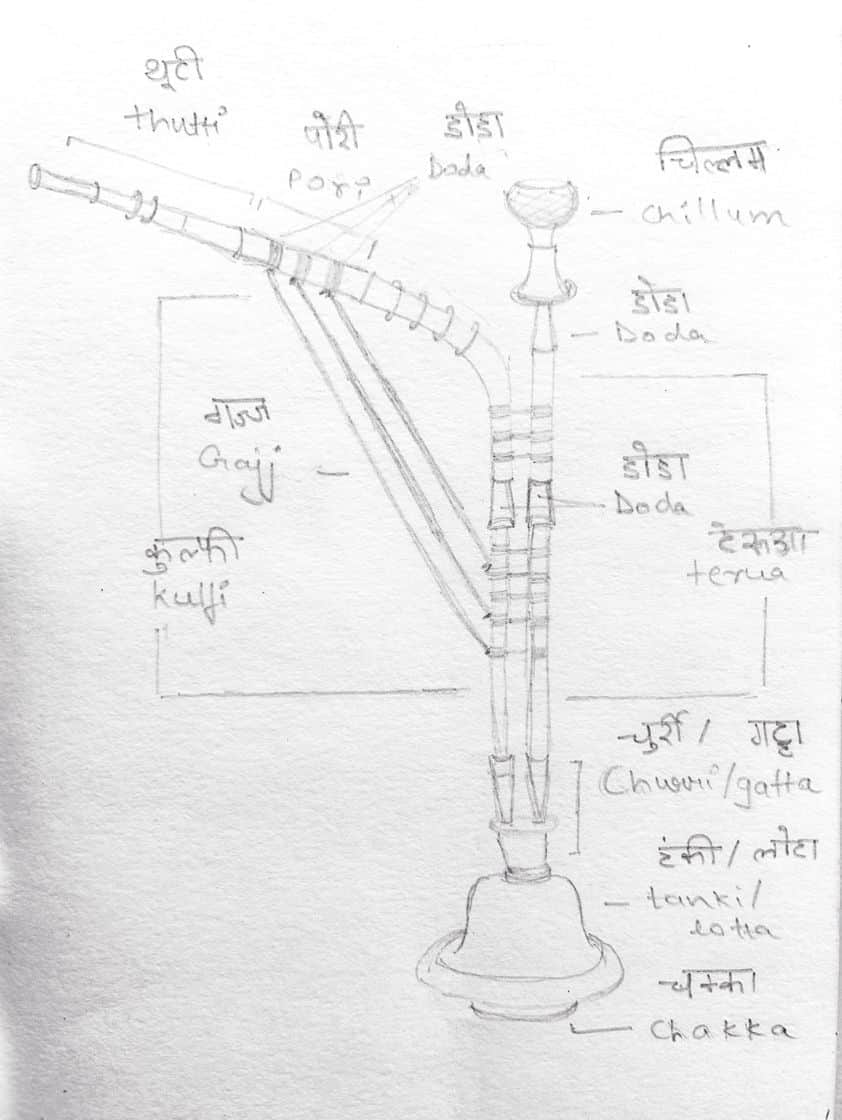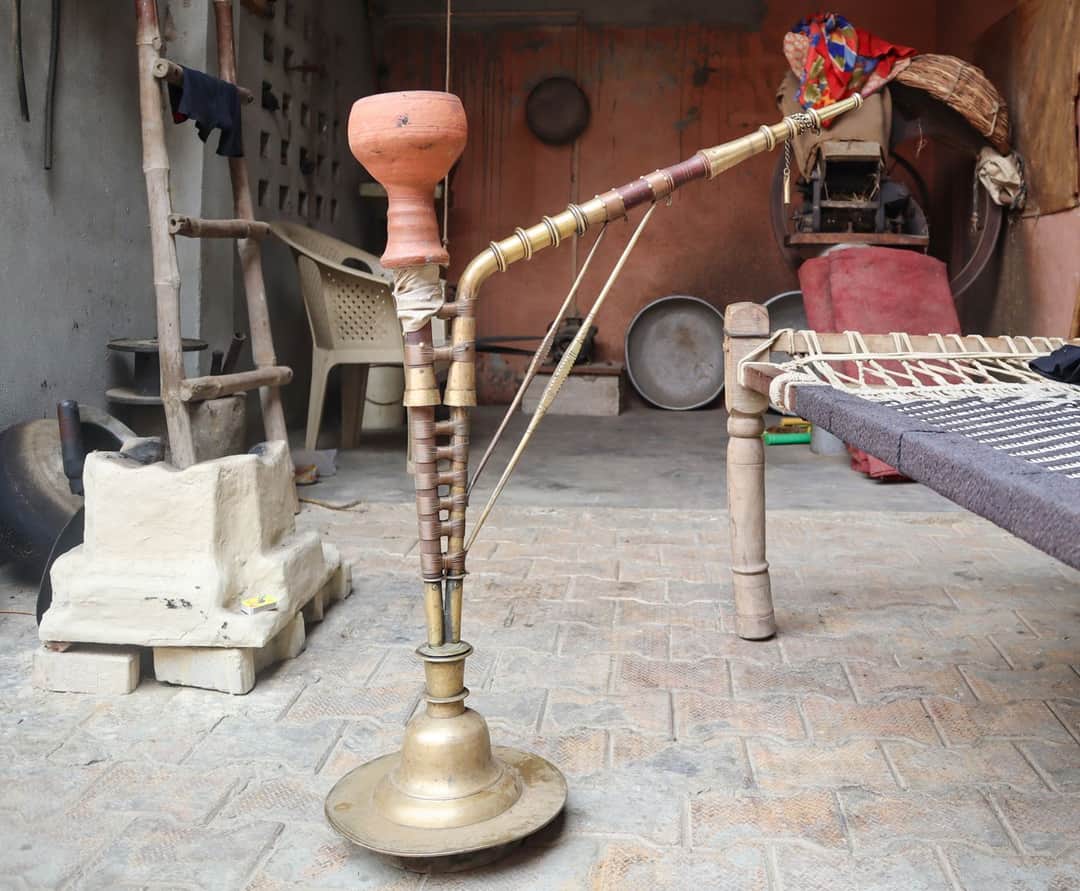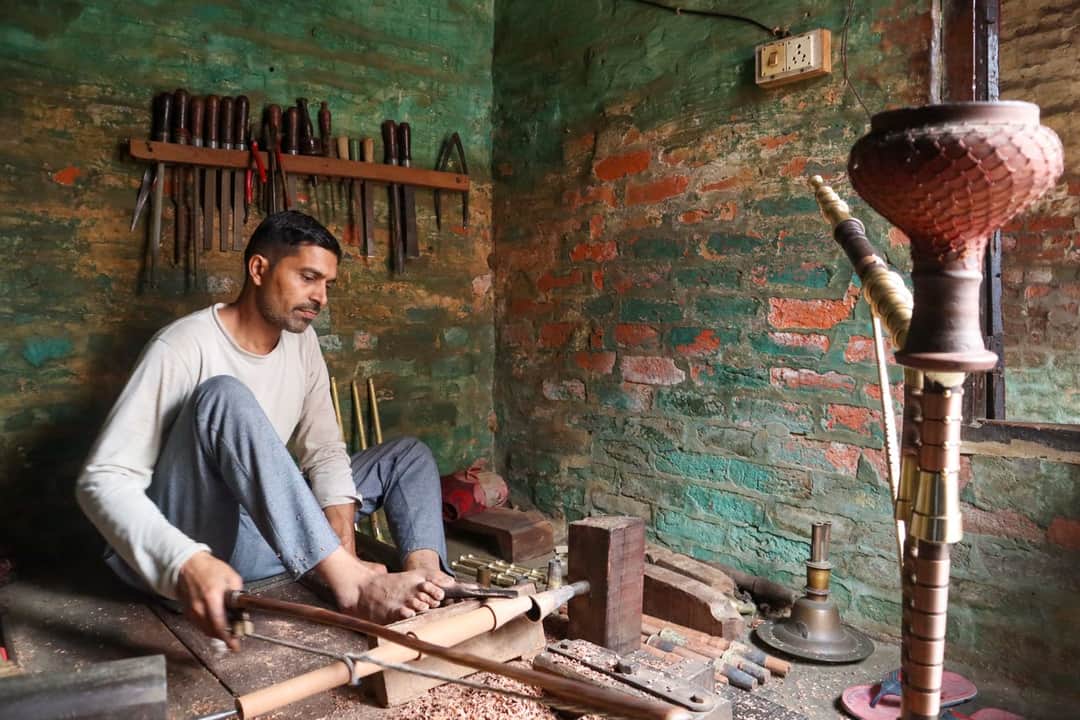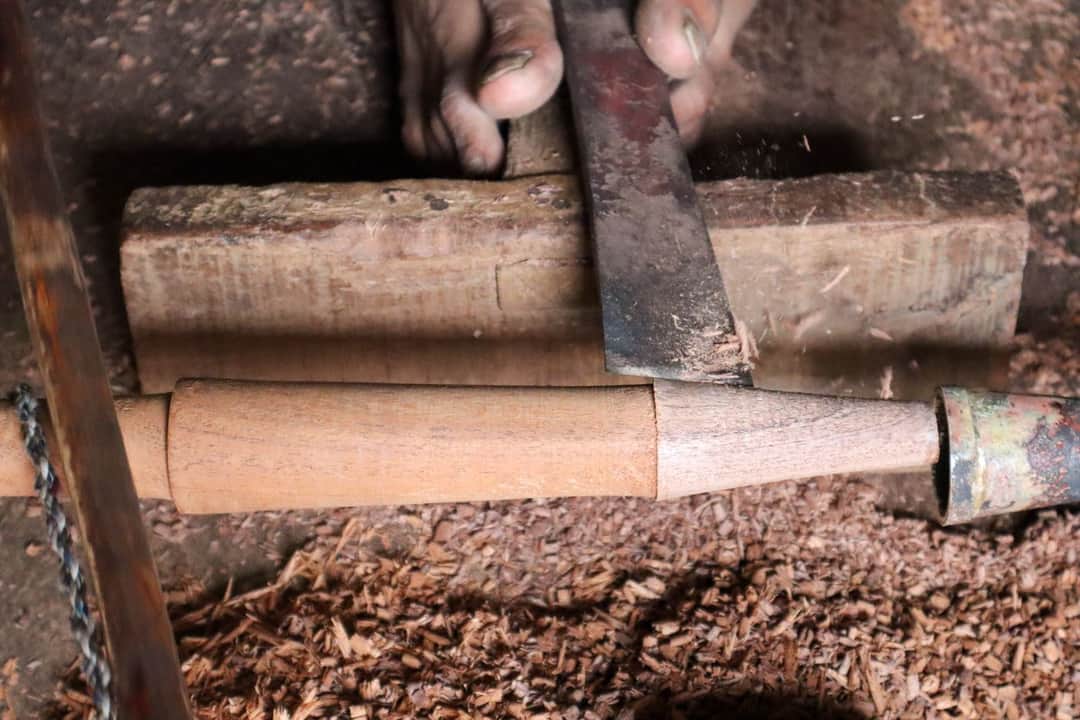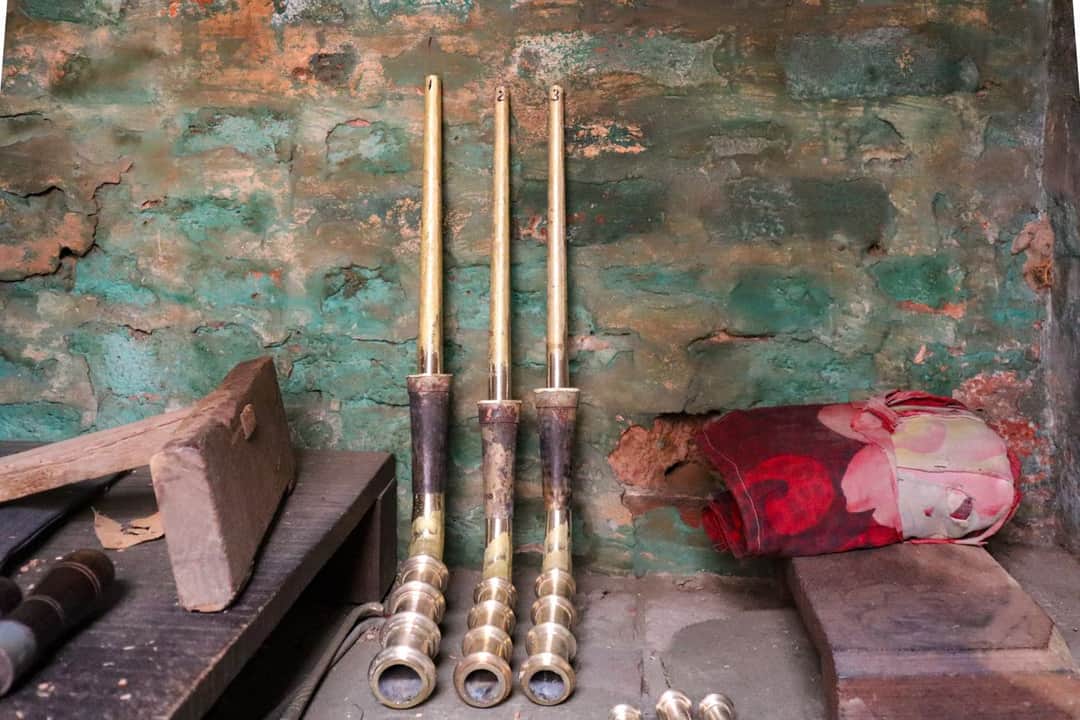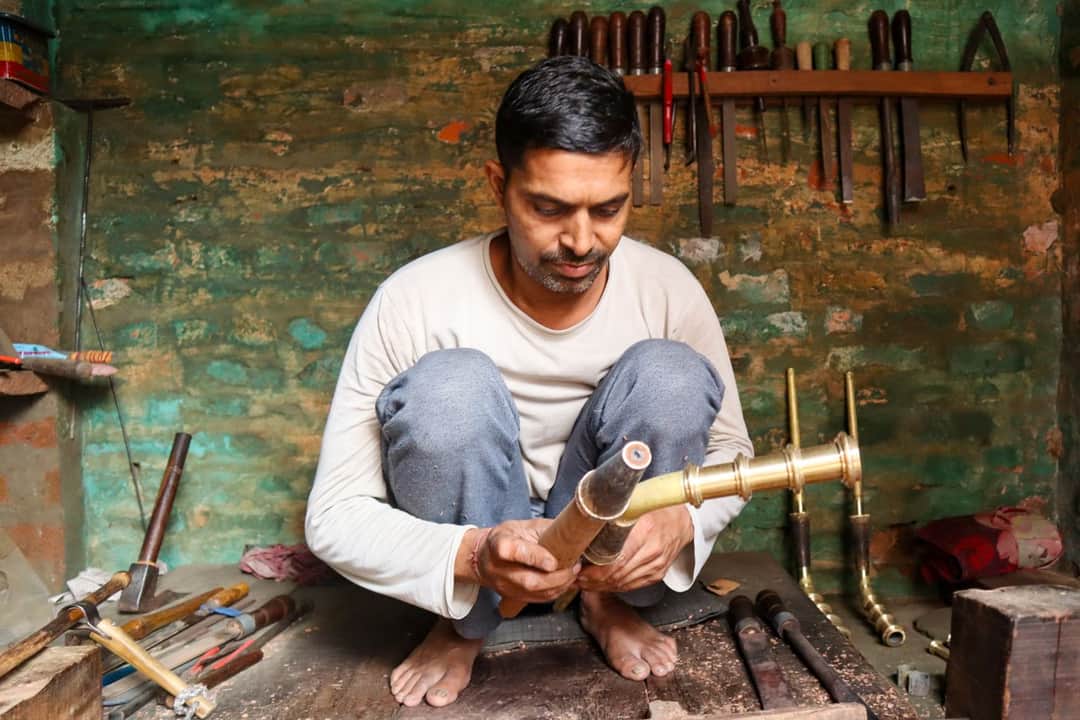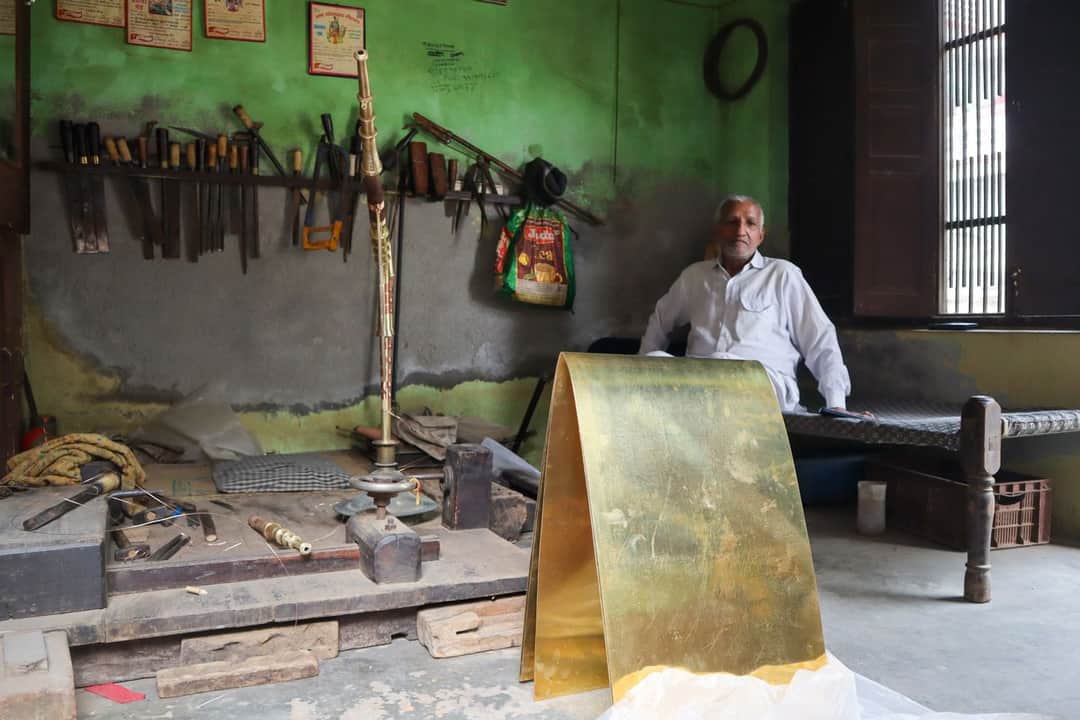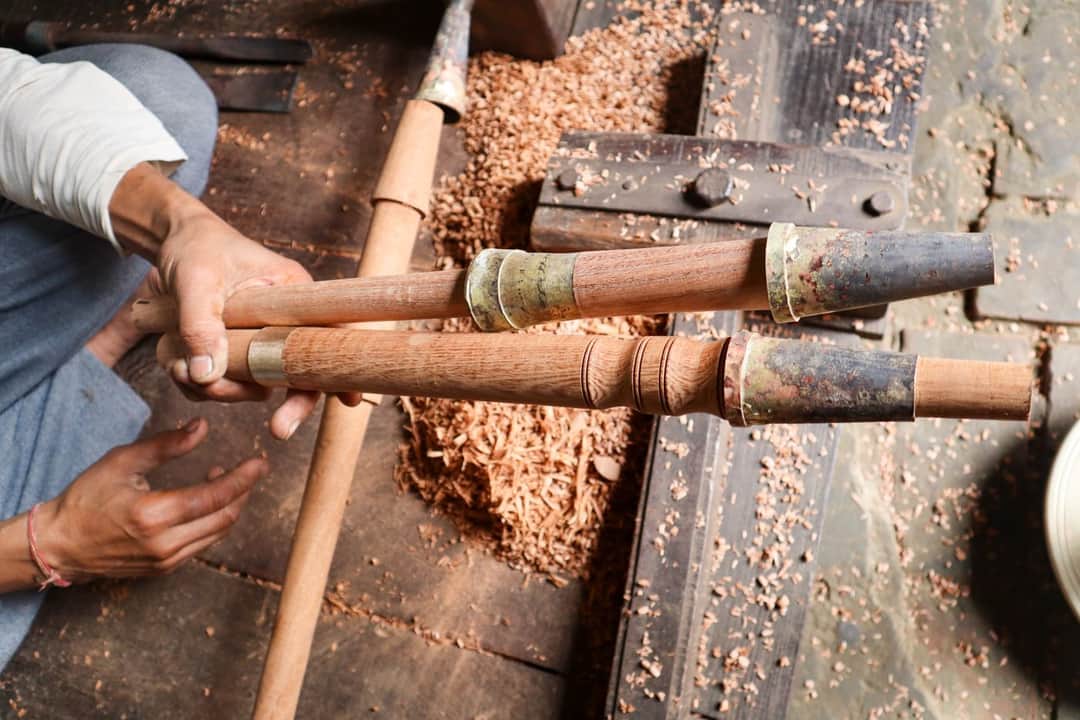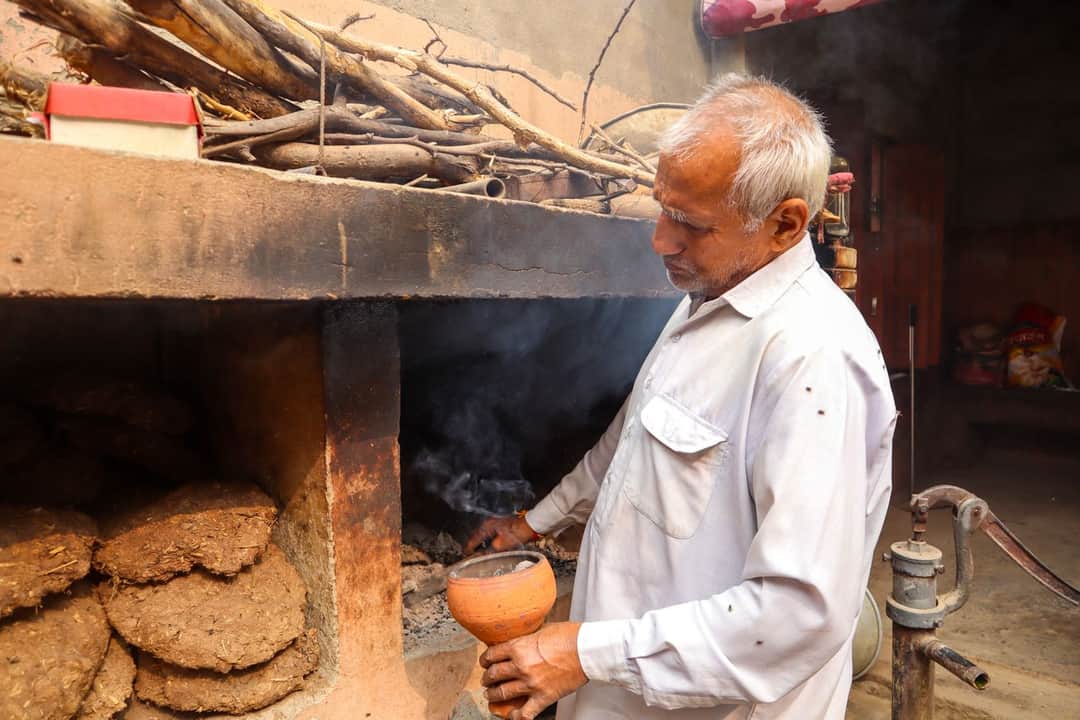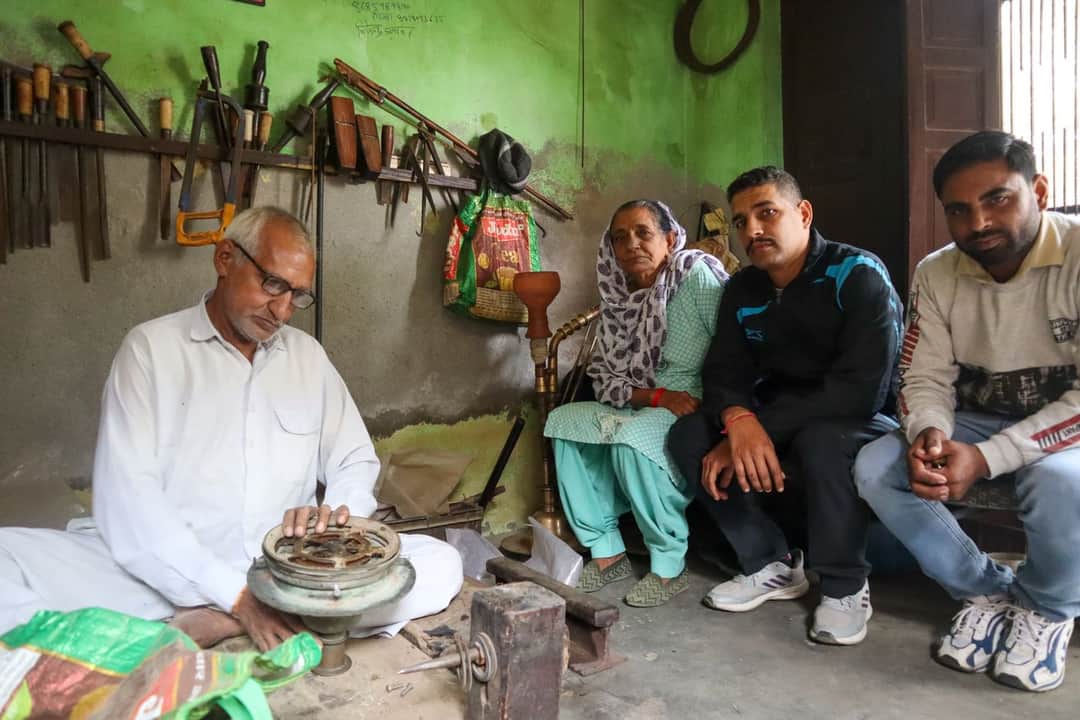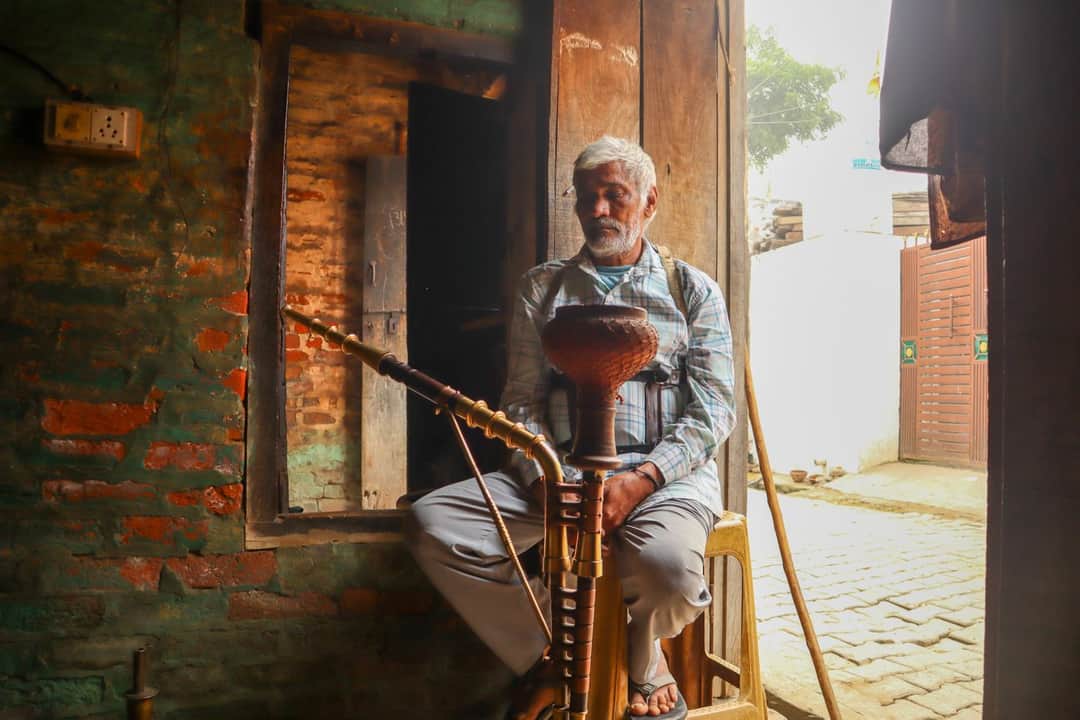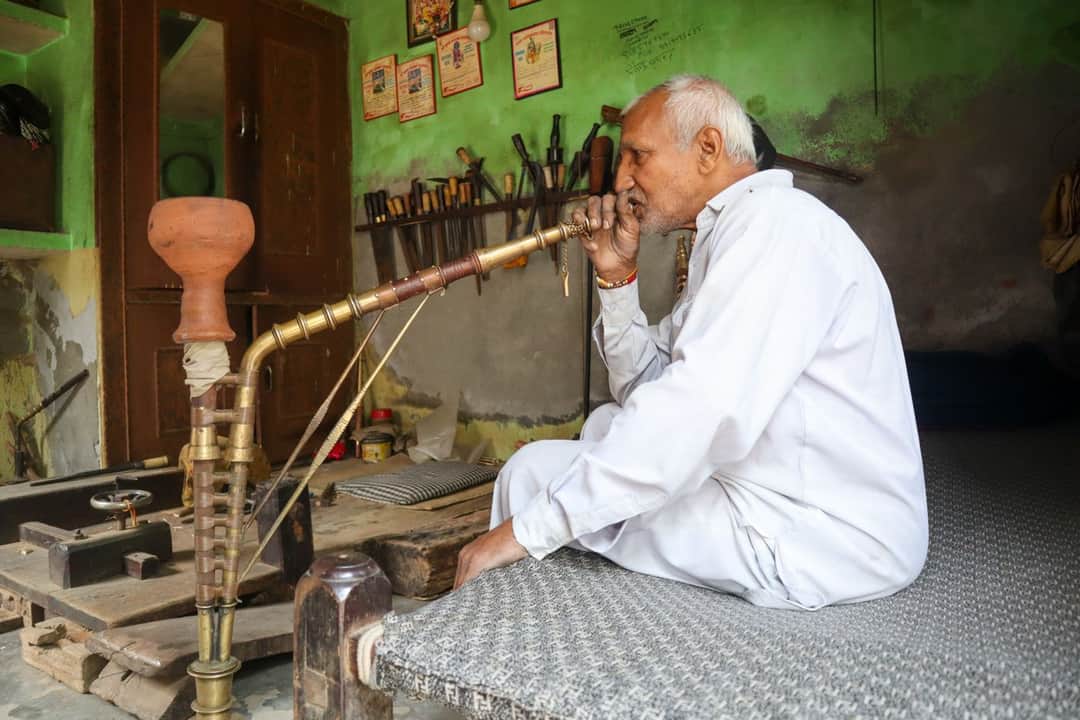

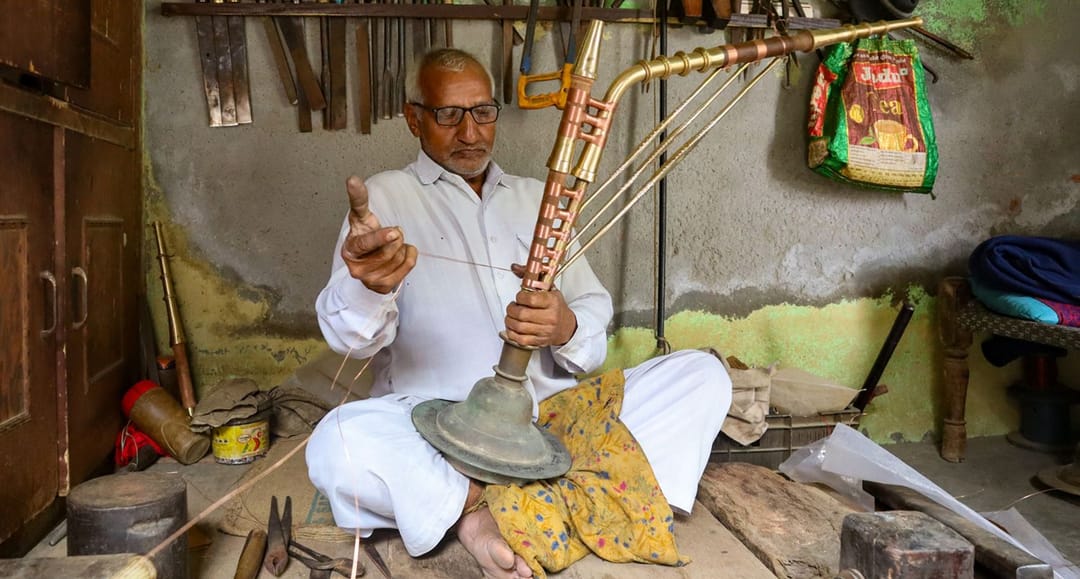
A hookah is always at the centre of gatherings in rural Haryana. “Hookah ke sahare panchayat chalti reya karti [The panchayat would run with the help of the hookah],” says Rohtas, recalling a common sight in the village square growing up.
“Unlike tea or water, which can’t last all day, a hookah is practical — you fill it with tobacco, light it once, and it keeps going. Five to ten people can sit together, sharing a hookah comfortably for hours. It also helps pass the time,” adds Rohtas (he uses only this name).
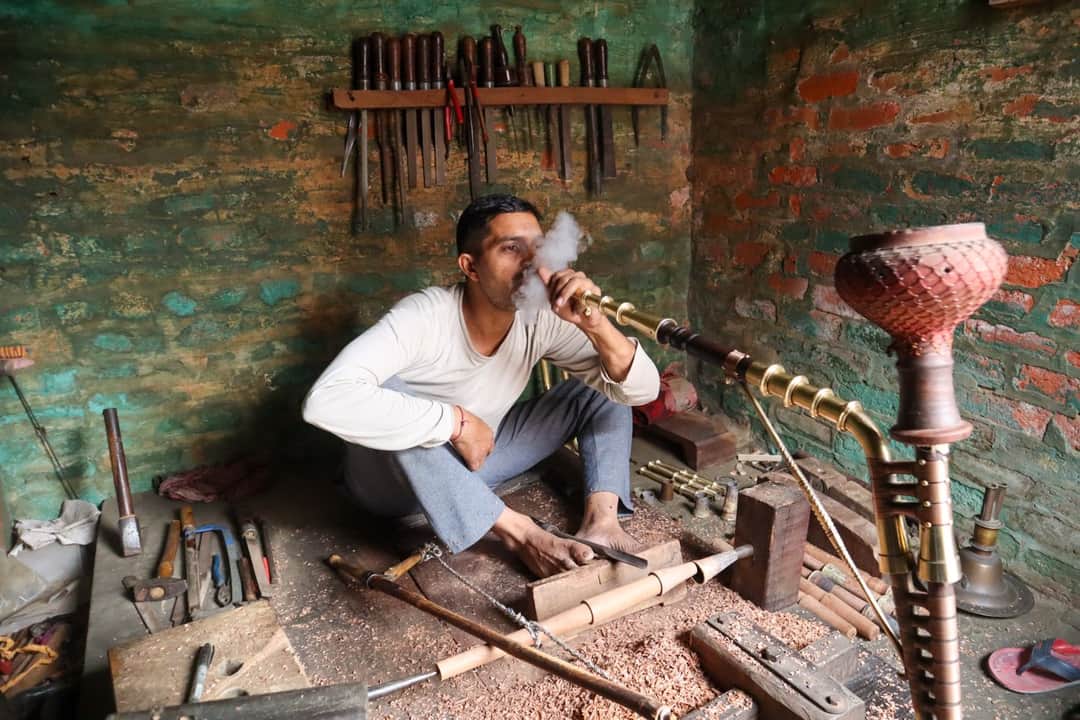
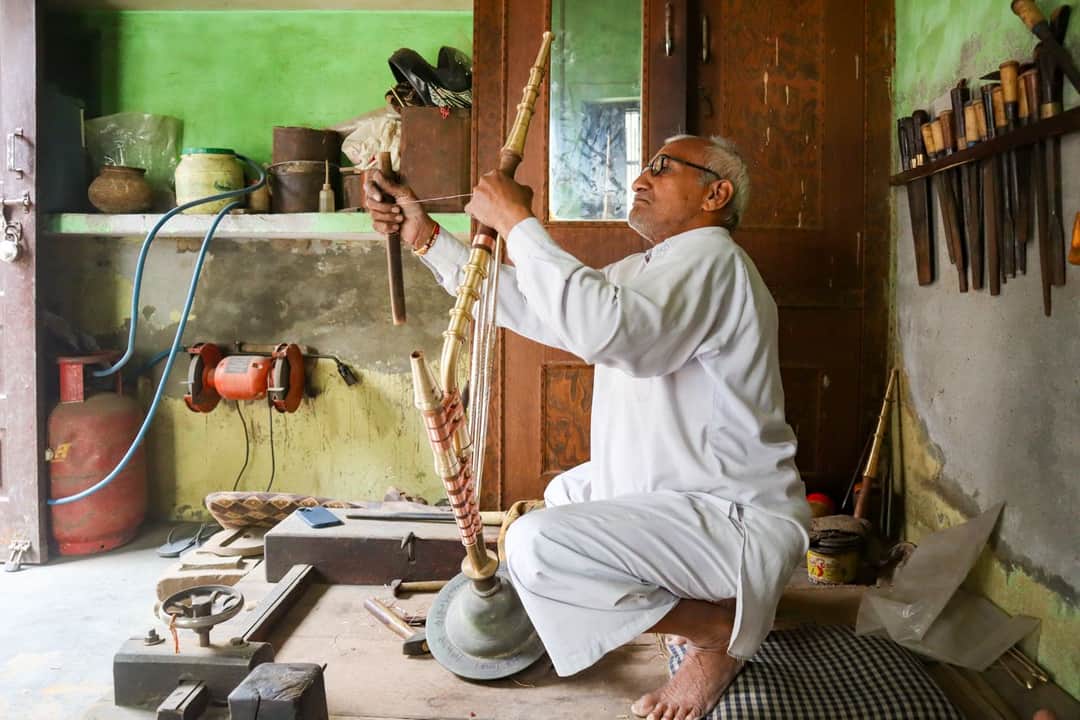
The 40-year-old hookah craftsman is smiling when he says: “now every house has become its own chaupal [village square], and every home has its own hookah.” As he speaks to PARI during a work break, he puffs on one — a habit he picked up 12 years ago, after taking up the craft.
The hookah pipe is believed to have originated in 16th-century northern India during the Mughal Empire. According to some accounts, Akbar, the third Mughal emperor, was among the first to use it. Other historical accounts, however, suggest its origins may trace back earlier to central and western Asia.
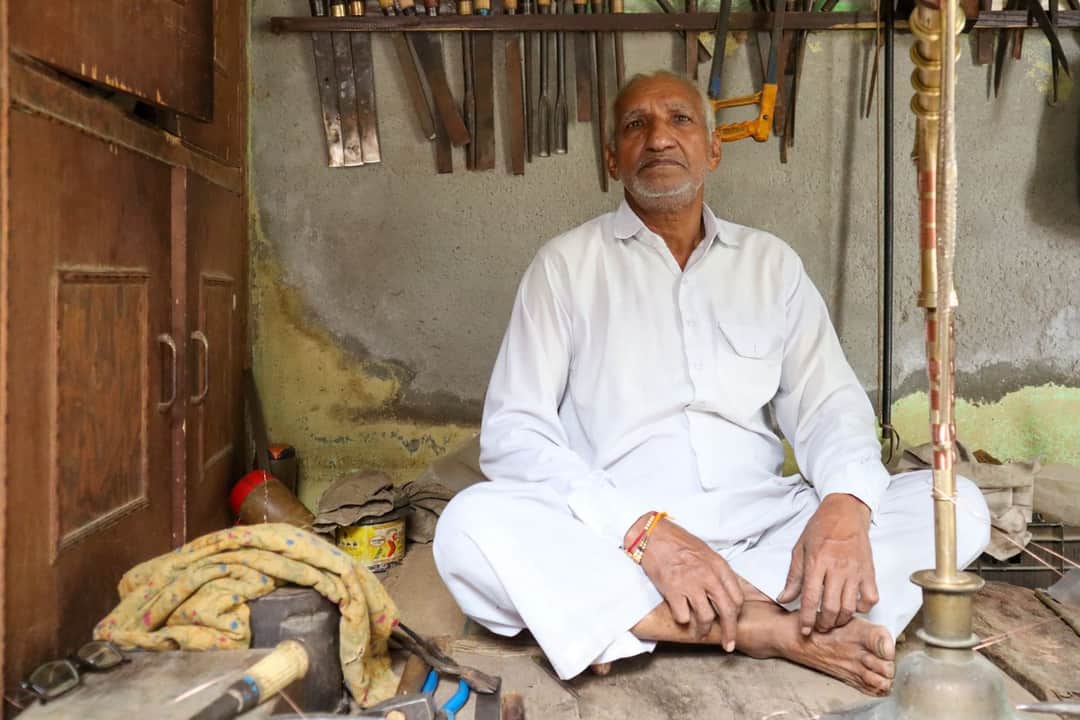
Either way, it’s a cherished tradition in the daily lives of Haryana’s people, “a part of our sanskriti [culture],” says Dharambeer. “Big decisions are made over hookah.”