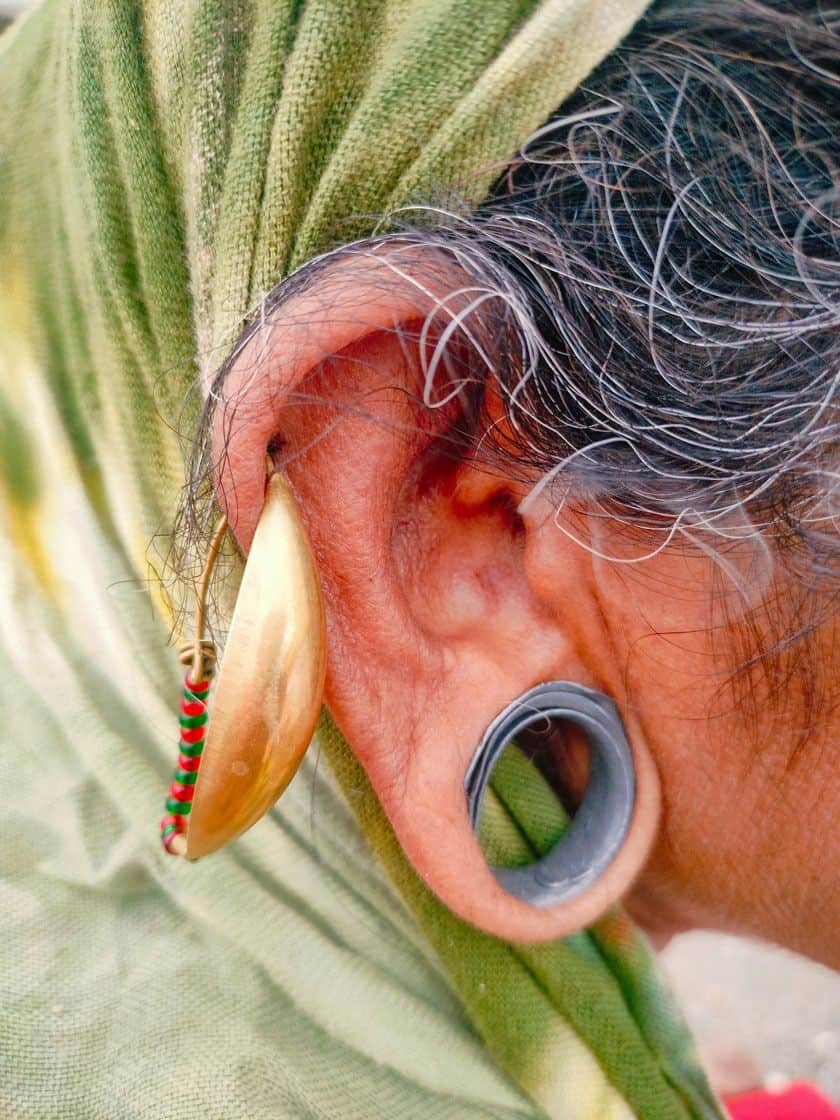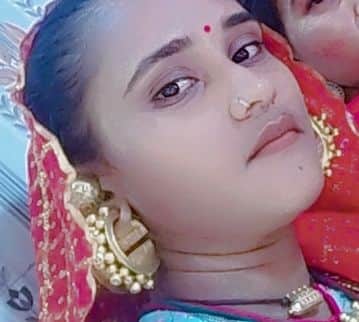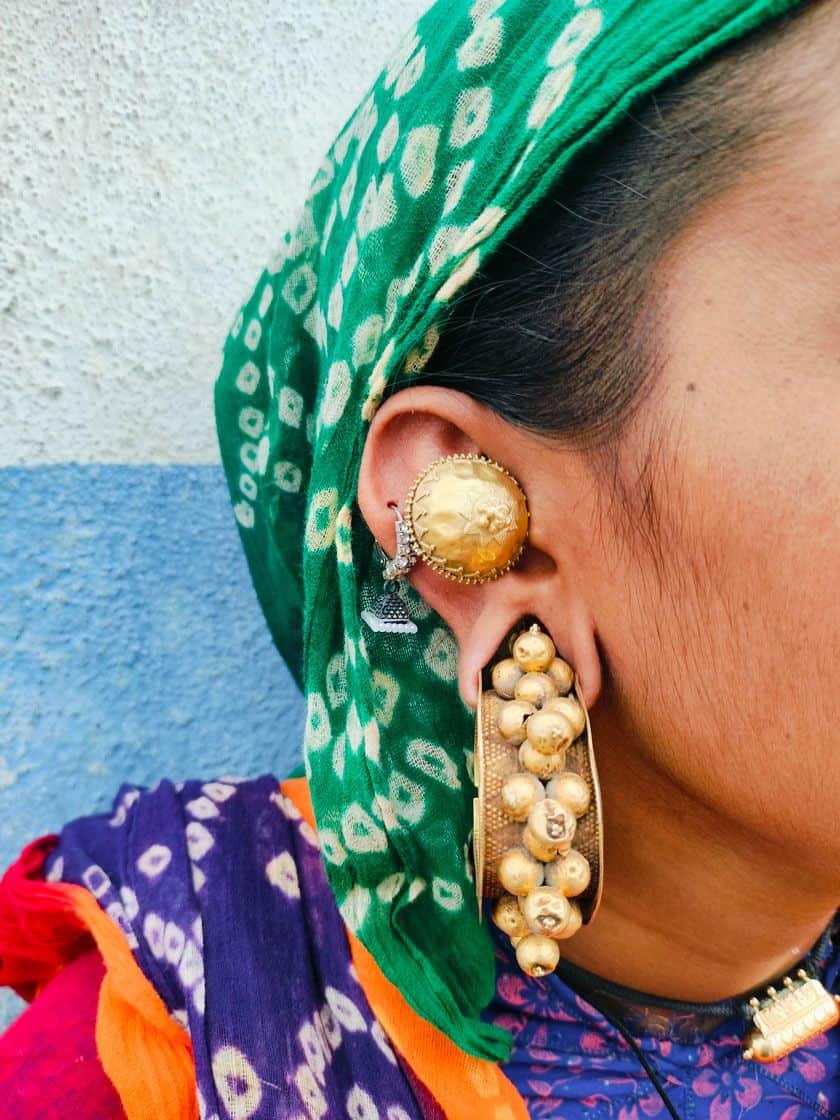

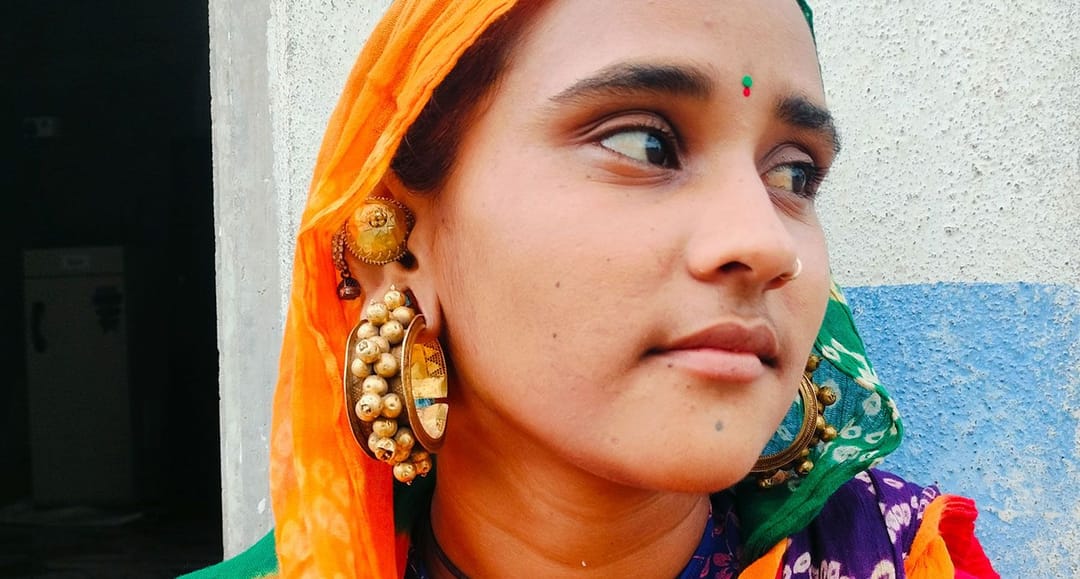
“Your daughter is all grown up and you have not yet got her ears ready for sulava?” The elder women will ask. Turning to the daughter next they will say, “Ben, have tara lagan mate pan aaveshe. Sasara pakshvalae sagaima kareli bolini mudat poori thai gai chhe. [Ben, you will be married soon. The time they gave at the engagement is about to finish.]” Such voices of elderly women, coaxing a young girl’s mother to get her daughters’ ears ready before marriage are still familiar within my community of Bhopa Rabari.
I remember my cousin Nathi Ben Mori had started getting her ears ready when she was 17. She is now 24. She always wears sulava – a set of big gold hoops, more than a centimetre wide. The family in which the girl is getting married would gift this pair of earrings weighing about two tolas (22.32 grams) to the would-be bride at the time of engagement. The earrings cost anywhere around two lakh rupees.
Sulava is our asset that will take care of us in times of need. But often families incur debt in getting these made. Things are expensive these days and we people are not so well off. We are pastoralists. In our own village, there about 3,000 people in the community and 60 per cent of those do wage labour and the remaining 40 per cent are into rearing livestock.