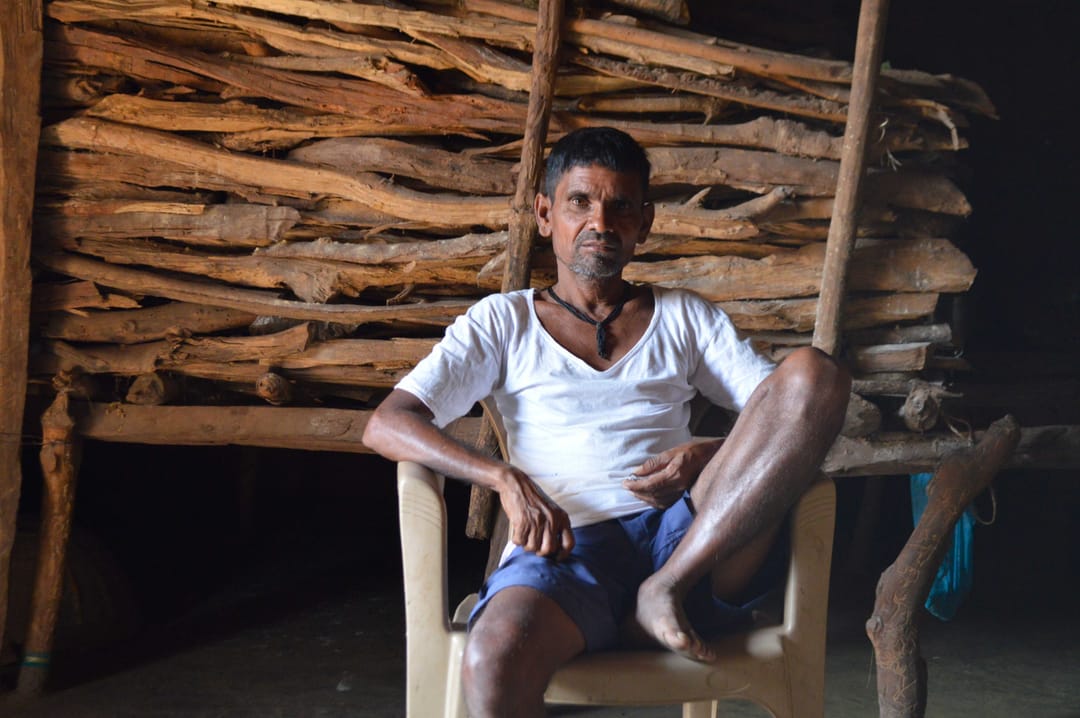
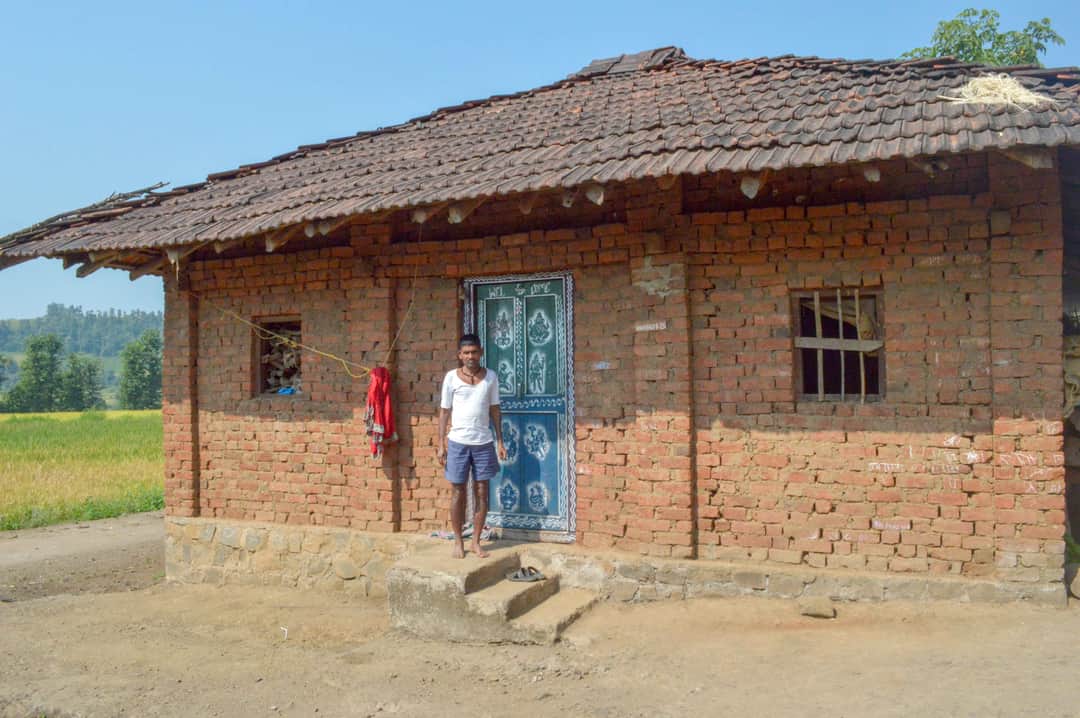
Most of the bhagats are locals (and are all men), known closely to the families who seek their help. Kalu Jangali, who was administering Nirmala, is from the Ka Thakur tribe too. He has been a local healer for 30 years. “These rituals have always been an intrinsic part of our tribal culture,” he told me on the night of the jagran. “In Nirmala’s case, the morning after this jagran, we will sacrifice a rooster and pray for her complete recovery. This ritual is done only when we find there is a negative force surrounding the patient. We know mantras which can ward off that evil force.”
However, for most part, the bhagats use herbs with medicinal properties. “We go to the forest to pick appropriate flowers, leaves and grass, and scrape portions of tree bark,” adds Kalu. “Then we prepare a decoction or sometimes burn the herbs and give the ashes to the patient to consume. This usually works if there is no negative energy around the person. But if something is beyond our control, we tell them to seek treatment at the medical facilities.”
Just as Kalu acknowledges the role of healthcare facilities, the primary health centres (PHCs) and doctors also don’t seem to be dismissive of the traditional healers. At the PHC in Washala village, around 20 kilometres from Chas, Dr. Pushpa Gawari, medical officer, says “We tell them [our patients] to seek advice from bhagats as well if they are not convinced by our treatment. If the tribals are not convinced by the bhagat's treatment, they again seek the advice of doctors.” This, she says, helps the doctors to not antagonise the local communities. “It is important that the faith of the people in the medical facilities and doctors also prevails.”
“They [the doctors] often seek our help in some cases which they can’t explain,” says Kashinath Kadam, a 58-year-old bhagat from Washala. “For instance, there was a woman who, a few months ago, for no good reason, went berserk. It looked like she was possessed. I then slapped her hard and by chanting mantras, I was able to calm her down. She was later sedated by the doctors.”