
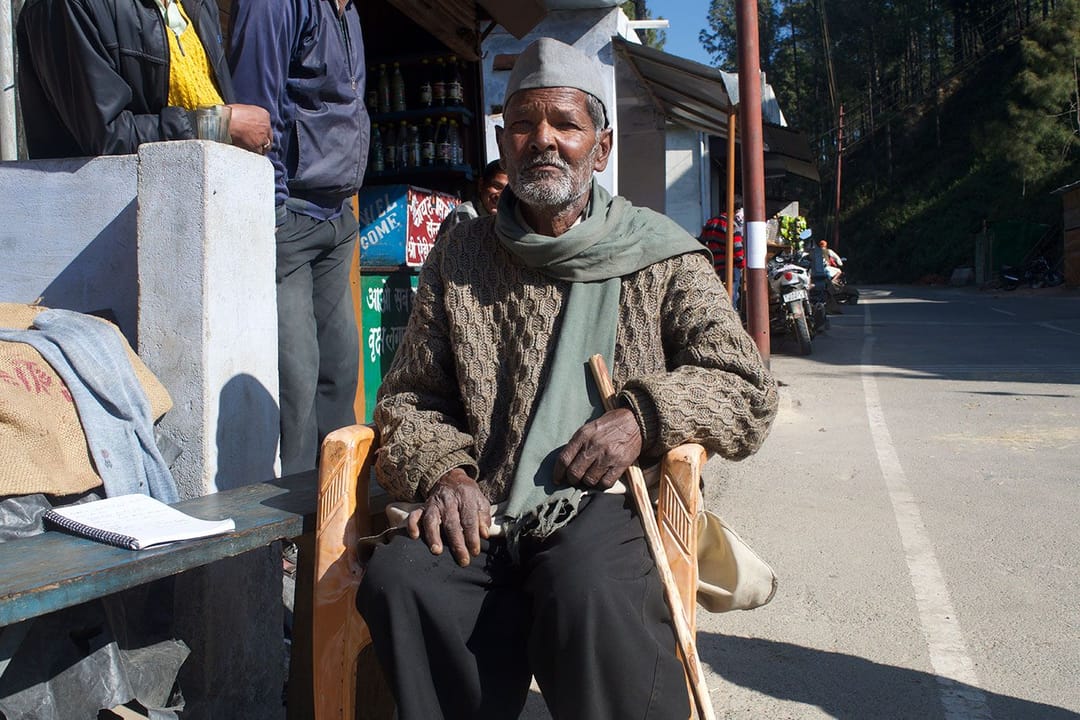
Dhari Ram walks unsteadily, his hands clutching a walking stick, forehead and eyes creased due to the harsh sun of the hills of Gadiura village in Champawat district of Uttarakhand. He is suffering from a hernia, but has no money for a surgery, which will involve travelling 150 kilometres to the government hospital in Tanakpur, or to one in Haldwani, which is even further away.
“I can’t earn even a rupee a month,” he says. So Dhari Ram, 67, a former labourer, a stone-breaker, depends entirely on his old age pension of Rs. 1,000, which he started getting from the state government seven years ago. That precious monthly amount stopped getting credited into his bank account in October 2016. It stopped after the state government discontinued the pension scheme for those who had not submitted their Aadhaar details to the social welfare department of their district.
Dhari Ram did go to register his details at the department in Champawat town, around 65 kilometres from his village, in April 2017. He also has an Aadhaar card, which he got three years ago when a privately-operated centre was opened in Bhingrara, a nodal area for around 10 nearby villages. But the name on the card – which he keeps carefully in a plastic cover – is ‘Dhani Ram’. And this does not match his name in the records at the social welfare department. So his pension was discontinued.


