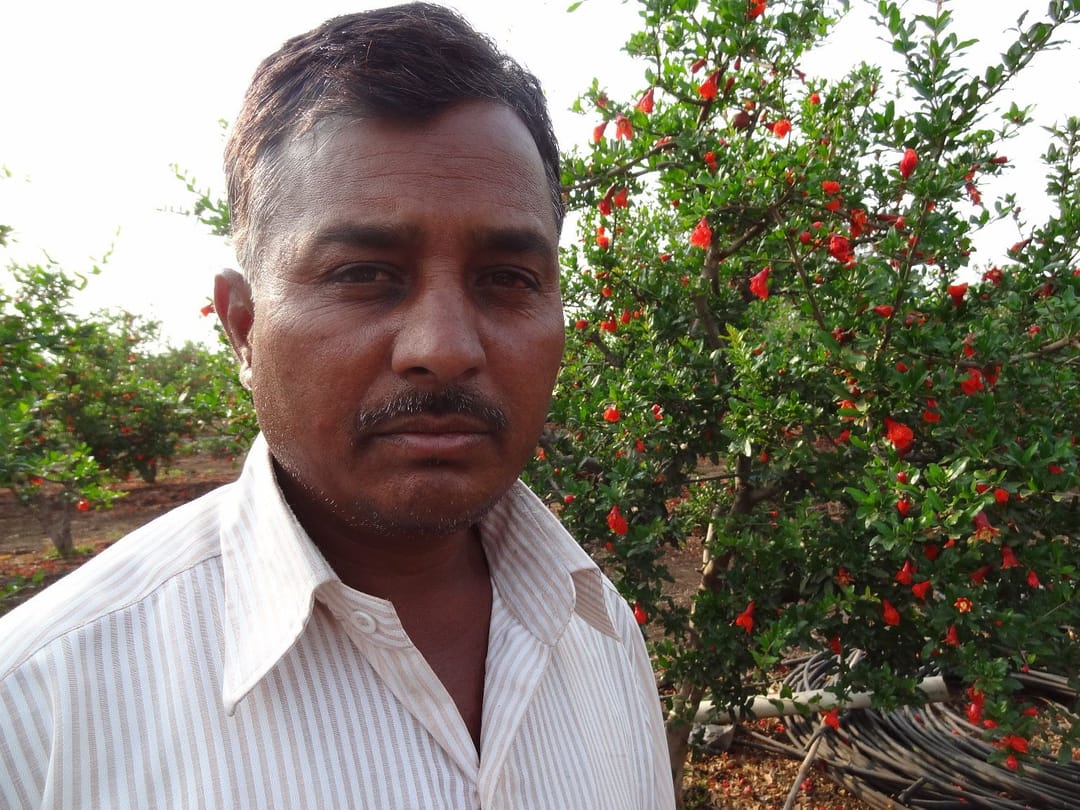
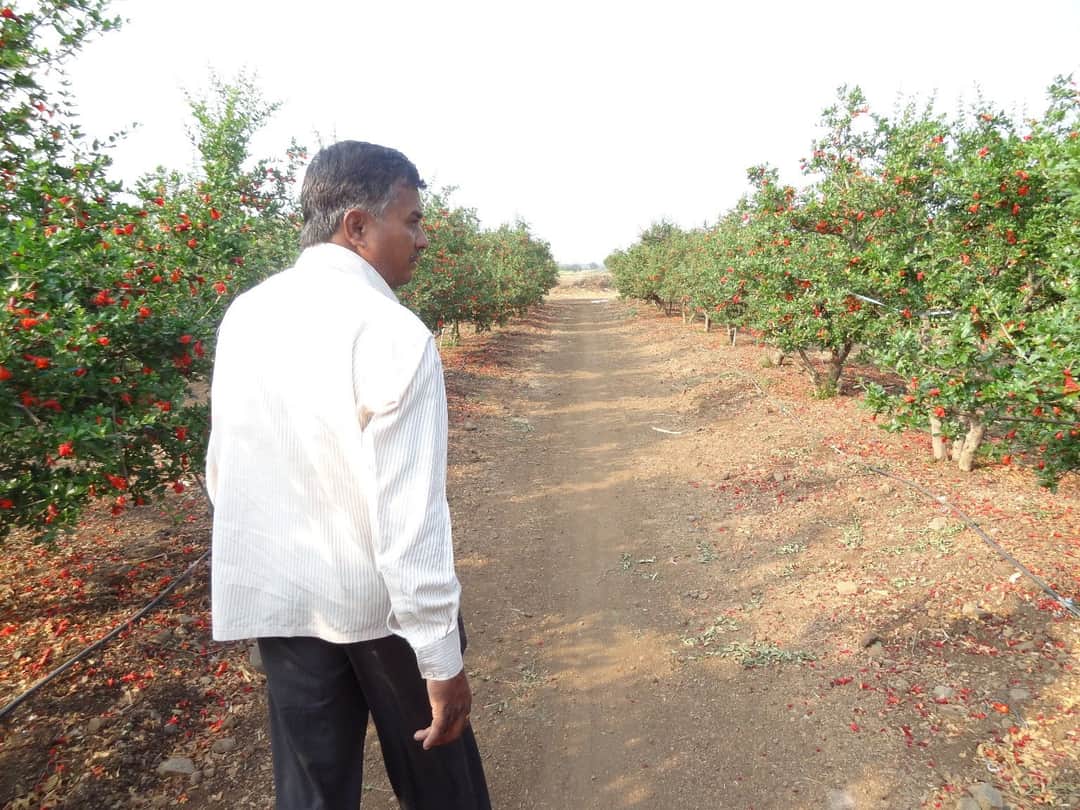
Halfway through, he’s steadily converting the entire land into the orchard. Some trees are fully grown; some have just been planted. The Jagtaps neatly stack the fruits, according to their size and shape, in separate plastic crates. The traders buy his pomegranates on his farm.
They will reach markets in Maharashtra, and as far as Chennai, Bangalore and Calcutta.
His annual returns from the orchard: Rs 45 lakh. His net profit after all the costs: around Rs 24 lakh. “For the past three years, the bulk of my production cost is towards water,” Jagtap says.
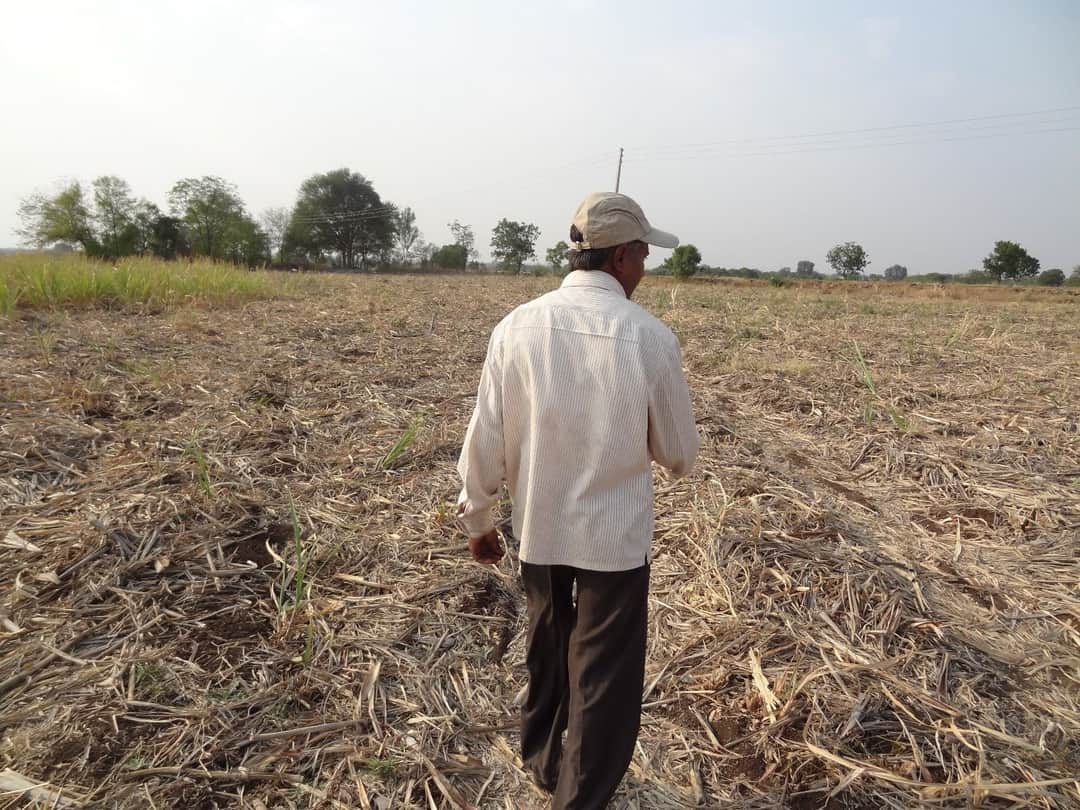
He has been buying water from private tankers or digging tube wells or farm ponds without success. For two years, it hasn’t rained at all.
“All I need,” he says, “is a good aquifer to last a few more months.” He is aware that he’s violating the government rule to get to that depth for water. “But I can’t let my trees wither and die.”
Jagtap is not alone in this part digging holes for water.
Tens of thousands of farmers across central-western Maharashtra are grappling to save their standing crops and orchards: from sweet limes to pomegranates, chikoos to papayas.
It’s only February and many of them have already given up. Forget farms or orchards, the focus now is securing drinking water.
Maharashtra went through a simmering drought in 1972, which broke the economic backbone of people who then mounted collective effort to rebuild a prosperous co-operative economy in every sector.
The state has been witnessing drought and rainfall failures almost every year in some or the other parts. But this one, according to many who have seen the process for years, is among the severest situations of all.
“We have food, we have money, we also have work to be made available to people, but we don’t have water,” Union agriculture minister Sharad Pawar recently told this reporter during a visit to Nagpur. In the 1972 drought, people did not have food and work, but they had water.
The spectre of this crisis cropped up as long back as October, last, when the rainfall in a large tract was abysmal. Chief minister Prithiviraj Chavan was compelled to declare a drought-like situation in nearly 123 tehsils in October-end as the monsoon began to recede.
Maharashtra has rushed to the Centre thrice in this past nine months for financial help like no other state has. For three straight years, rainfall has been below 50 per cent of the long-term average, erratic, and in spurts, in the affected areas.
One third of Maharashtra falls in what is known as the rain-shadow zone where rainfall is unreliable and averages 500mm or less. Ground water table across this region has depleted by several metres as people go deeper and deeper to meet their needs.
Consequences are long-term, multi-dimensional, and with losses running into several thousand crore of rupees, some effects of this year’s early situation would resonate for generations, former Lok Sabha MP from Ahmednagar Vitthal Gadakh wrote in Marathi Lokmat recently. Gadakh was witness to the 1972 drought as a member of his district’s zilla parishad; people and cattle starved for months then.
Estimates suggest that Maharashtra would lose orchards spread over about 5 lakh hectares, a loss of recurring nature for individual farmers. It takes around four to nine years for a pomegranate or sweet-lime orchard to deliver returns. Grape vineyards in many parts have just burnt, devoid of water.
Dry land and sustenance farmers are having an even more torrid time. Kharif and rabi crops have perished. Food crops have remained stunted. Fodder shortages are threatening livestock sustenance.